Always On Call
| October 6, 2022Meet three very heroic people who choose to be there for us in our times of need
In our everyday lives, we usually coast through the day with only minor inconveniences interfering with our plans. And then there are the other kind of days: The days when something big goes wrong. It’s during those times that we rely on others who have the tools and the skills to get us through our crisis. But what’s it like on the other side? How does it feel to always be the one rushing to help another in need? What is it like to face crises day in and day out? And what makes someone want to be that person who is on call to help when there is a problem? Meet three very heroic people who choose to be there for us in our times of need.
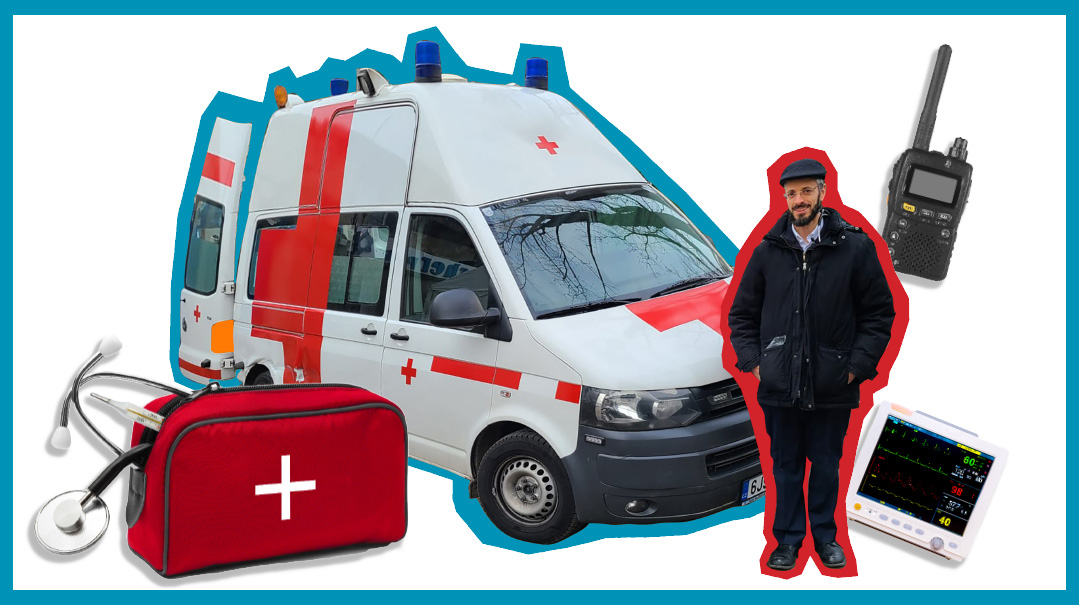
Hatzolah
We’ve all seen Hatzolah EMTs and ambulances, and there’s a good chance you may have even called Hatzolah once or twice in your life. Let’s see what it’s like to be the one who actually responds to those calls.
Dovid Josephovitz
Volunteers for: Hatzolah
Number of years: 23
I was interested in Hatzolah for a long time. My father gave classes to the first Hatzolah volunteers and that was probably what made me excited about all things medical. When I was in yeshivah, Hatzolah came around recruiting volunteers, so I asked my rosh yeshivah if I should join. He told me I should, but warned me that when it comes to Hatzolah, you volunteer once, and then you’re always on call. You’re obligated to answer a call whenever it comes in, during seder or if you are in the middle of something, you no longer have a choice. If you’re in, you’re in. I decided I wanted to be in.
The life of a Hatzolah volunteer:
Most Hatzolah members have a full life besides for Hatzolah. We work, we learn, we help our kids with homework. My day includes davening, working, learning, and helping my family. Somewhere in between, I volunteer for Hatzolah. Calls come in all the time, all day, every day. If I’m available and nearby, I respond to the call. But if I’m in the middle of something, I will only go if the person is someone I know. Other than that, I’ll let someone else take the call. On average, I respond to one call a day.
So you want to join Hatzolah?
There are two levels of volunteers: EMTs and paramedics. The first step is to become an EMT. That means you can provide emergency medical services. For most calls, an EMT is enough. To become an EMT, you need to take a course and pass a state test. After that, you get assigned to your first unit.
I think the best person to become a Hatzolah volunteer is someone who really cares. Caring is the most important thing.
RELATED CONTENT

Don’t want to work in any of the standard professions? No prob. This list has you covered. Or… maybe not!

Unfortunately, Nellie had forgotten exactly how big the Mendelson backyard was

“If you have a good voice, it’s a gift from Hashem and a responsibility”

An amazing true story that shows how important it is to ask for mechilah