Greeting the Ghosts of Salonika
 | August 15, 2017
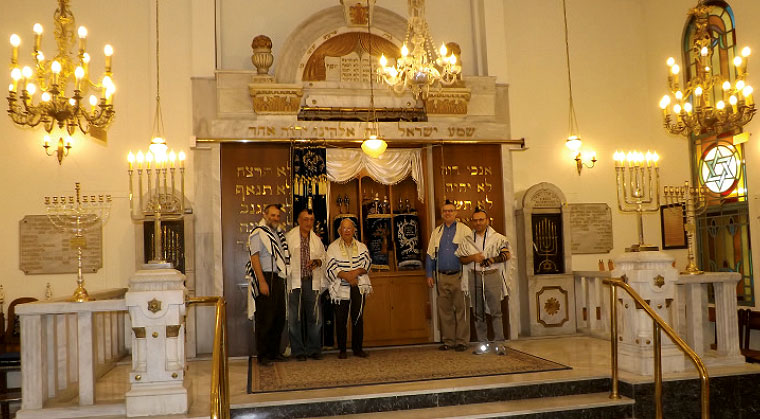
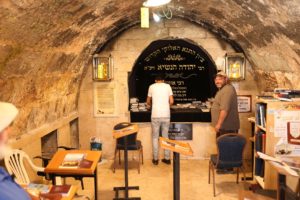
ACTIVE INVOLVEMENT Yad Lezikaron is Salonika’s only active shul. The community pays people to make sure there’s a minyan. The shul is on the ground floor of an eight-story commercial building owned by the community. Often there are community-wide Friday night dinners that attract upward of 100 people (Photos by Ari Z. Zivotofsky and Ari Greenspan)
I t was known as “La Madre de Israel” (the Mother of Israel). And probably the only city of this size and importance in the entire Diaspora that had a Jewish majority. A city in which even the non-Jews had to speak Judeo-Spanish Ladino in order to engage in commerce.
Thessaloniki or Salonika as many know it was one of the most important trading ports on the Mediterranean — and by the early 16th century Jews constituted over 50 percent of the population of this central Greek metropolis. Jews were so dominant that the lifeblood of the city the large port was closed on Shabbos and Jewish holidays.
For over 450 years Salonika was the main center of Jewish Sephardic life and in the early 20th century there were 35 Ladino newspapers in the city. We were told that when the Nazis invaded Greece they were able to recognize some of the Jews by their inability to speak Greek despite their families having lived there for centuries.
We were excited to get a chance to see this ancient community — yet ended up saddened by its utter decline.
Men for a Minyan
The week we visited the local rav Rabbi Aharon Israel — who had been a big help to us in preparing our itinerary — had gone to the countryside with the Jewish camp. His family stayed behind though and when we met his wife and children over Shabbos there was the mandatory Jewish geography surprise: Her sister was visiting from Israel and it turns out their family lives a block away from Ari Z. in Beit Shemesh.
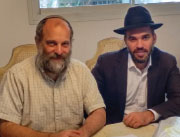
After davening in Yad Lezikaron Salonika’s only active shul. The community pays people to make sure there’s a minyan but they were all on vacation. Together with these men we were able to cobble together a quorum
A substitute rabbi the very learned multilingual Rabbi Yosef Serfaty was there from Belgium. At first we couldn’t understand why another rabbi was needed. Couldn’t the community manage without a religious leader for a week or two? Well the answer is no. Simply put there is nobody who knows the nusach well enough to lead services or how to read the Torah fluently. The community pays ten men to make the minyan so there should always be davening (reminiscent of the Talmud’s ten “batlanim”) but it was our luck that our visit fell during vacation season and they were all away. Between the rabbi ourselves and a few others we eked by with barely a minyan.
“I tried to get five to stay and five to go this week and the same for next week. Why must everyone leave on the same week?” says Regina a vibrant active community member. She and her husband Ino have moved closer to Torah over the last years. For example although Ino had limited formal Jewish education he has taken it upon himself to prepare and lein one aliyah each week. He also serves as the gabbai and both he and his wife come from old Saloniki families who survived the war.
Their daughter lives in Israel and their son is in the family business currently in Cyprus and also with plans to move to Israel. They’ve gone the way of most of the young people — for those few who have stayed it’s hard to find a spouse.
RECOMMENDED
RELATED CONTENT

Even a volcano couldn't keep us away from Sicily's first bris in 500 years
How did a clandestine Jewish community in the shadow of Mount Kilimanjaro stay under the radar for so many decades?
High on isolated Indian cliffs, the Bnei Menashe are almost living Jewish

Ari and Ari visit the spot where Moshe was hidden in the reeds
Ari and Ari retrace our forefathers' journey to Egypt