Still Here
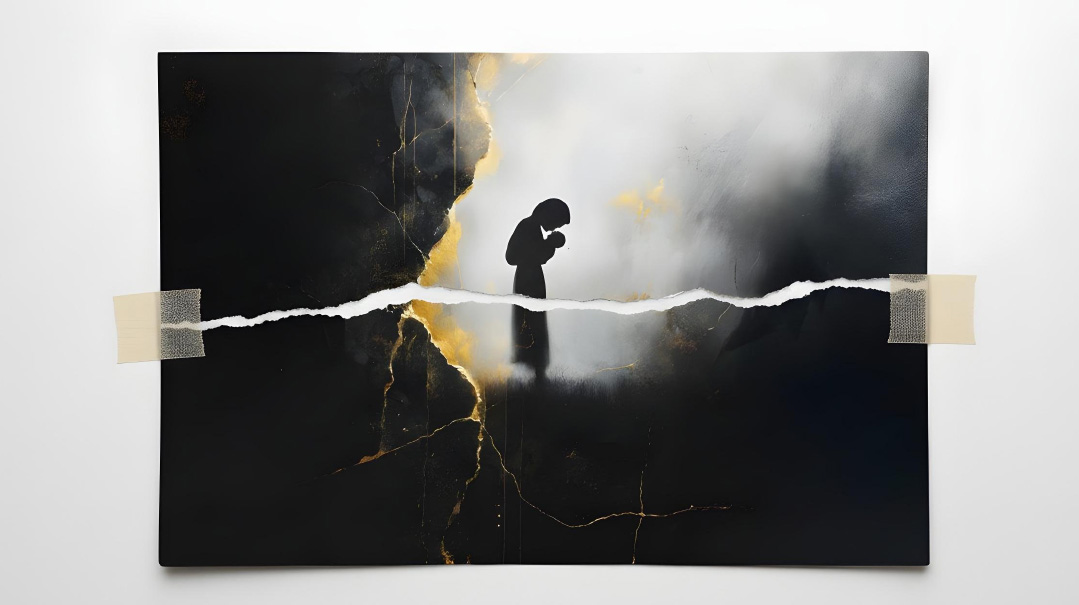
| December 23, 2025How I pieced together a mother-daughter bond from scraps of hurt and hope
T
he first time Ima said I love you, I mumbled something in response, and quickly ended the call. I had to put my kids to bed.
Saying Shema with them, I noticed my hands shaking slightly and my heart beating faster than usual. Hamalach, Adon Olam, and of course — I love you, Princess. I love you, Munchkin. Sweet dreams!
I lay in my daughters’ room as the questions around me slowed and blurred and were replaced by soft, slow breathing… and hyperventilated.
Ima said I love you. Ima. Said. I love you. She said it!
I dreamed of Ima telling me she loved me for so, so long. And now it made me feel… nothing. Weird. Like I had been waiting all my life for shooting stars only to learn that what I could see had fizzled out millions of light-years away.
I was almost 40 years old.
Growing up, I had no reason to believe that Ima loved me. She spared no words in telling me where I was lacking, what I needed to do better, in which ways I was failing. What did I know of mental illness? I knew she thought I was a slob. I knew she thought I was destructive, bad tempered. Stubborn.
Tell a kid that about themselves enough, and the leap between “Ima thinks I’m a slob” to “I’m a slob” isn’t all that huge.
Once I mistakenly knocked a bottle of oil over and Ima flew into a rage. She yelled such horrible things at me, I couldn’t breathe. I remember hunching over the stain, scrubbing and sobbing, sobbing, sobbing. Abba came in and tried to calm me down. “Please don’t cry. Ima didn’t really mean what she said, you know,” he told me. Of course I didn’t believe him. I knew Ima couldn’t stand me, and this was a good opportunity for her to tell me how awful I was.
As I grew older, Ima’s outbursts grew worse. I was still too young to know what a psychotic episode was, but when I lived through one of Ima’s, the realization slowly dawned. Ima wasn’t normal. Normal mothers did not tell weird stories about evil people to kids; stories that made them feel that someone was out to get them. Normal mothers did not disappear for hours on end and leave their children to fend for themselves. Normal mothers did not lie in bed for days and days, leaving their daughters to scrabble through baskets to find clean clothes.
My father stepped in to perform household duties in any way he could. I had food, drink, shelter. I was not neglected. And at least I knew that Abba loved me. But Ima? No, Ima did NOT love me.
RELATED CONTENT
“It’s a message,” I told my husband. “I’m going to start covering my hair. Hashem wants to protect me”

My children struggled terribly after my divorce — and my oldest daughter struggled the most


I couldn’t care for my children, couldn’t keep house. Who was I when all the stitches unraveled?