Forged Through Fire
 | December 23, 2025
Once a hunted child, Rebbetzin Shulamis Wolpe became a builder of souls
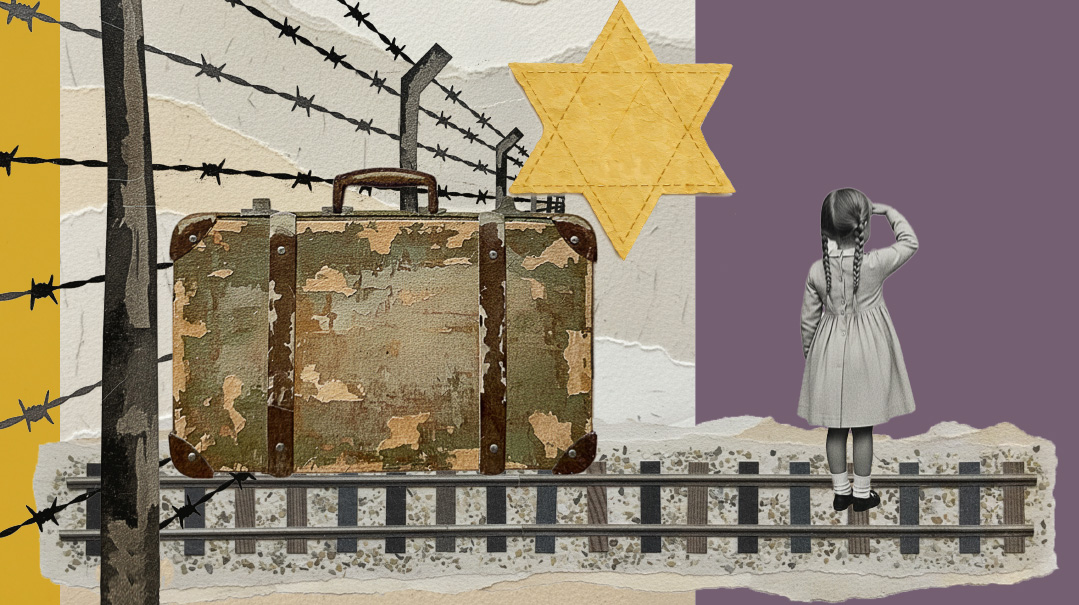
A scion of Slabodka, as a child, Rebbetzin Shulamis Wolpe survived the horrors of the Holocaust by remaining just one small step ahead of the Nazis. She went on to become an eishes chaver, mother, and teacher of generations of Jewish girls
W
hen Rebbetzin Shulamis Wolpe was four years old, her parents, Reb Leib (Aryeh Malkiel) and Sarah Yehudis Hy”d Friedman, hosted Rav Elchonon Wasserman ztz”l in their home. At one point, he turned to little Shulamis and asked her for a brachah. “A child of that age has pure speech, and thus her brachos have power,” Rav Elchonon said.
It was through the power of her pure speech that Shulamis stayed alive and stayed sane as she was tossed from hiding place to hiding place during the years of the Holocaust and managed to smuggle herself into Eretz Yisrael from Europe at the war’s end. And she continued to utilize her power of speech to become a successful mechaneches and later menaheles of Bais Yaakov Shiras Chana in Tel Aviv, and a sought-after speaker who shared her experiences as a child survivor of the Holocaust.
Rebbetzin Wolpe is the youngest of three sisters — her oldest sister was Rebbetzin Rishel Kotler a”h, wife of Rav Shneur Kotler of BMG in Lakewood, and the next was Rebbetzin Rochel Sarna a”h, wife of Rav Chaim Sarna of the Chevron Yeshivah in Yerushalayim.
“I didn’t really remember Rishel from my childhood,” Rebbetzin Wolpe tells me from where she’s seated on her couch in her apartment on Rechov Maimon in Bnei Brak, a small table piled with sifrei kodesh, a Nefesh Shimshon on top, in front of her. “She was much older than me. I was four years old when, the day after getting engaged during Chanukah of 1940, she followed her chassan, Rav Shneur, and escaped Europe. Later, as an adult, I visited her a number of times in America, and all the pictures I have of my father”—she points to the wall opposite, and I turn to see a framed black-and-white photo of a bearded man with the same striking square jaw as she has—“and my mother”—this time she points to a picture above the tapestry couch, a picture of the same man with a woman in a sheitel curled 1930s-style, sitting at a table covered in a white lace tablecloth, two young girls standing beside them—“are copies of photos she took with her when she left.”
They’re all that remain of the Friedman family. Reb Leib was murdered at the Ninth Fort in Lithuania during the Great Aktion in October 1941, when the Nazis rounded up many of the men in the Kovno Ghetto and shot them, not long after Rav Elchonon Wasserman suffered a similar fate at the Seventh Fort. Sarah Yehudis hid with partisans in the Lithuanian forests and was killed during a battle between the Nazis and partisans in the summer or fall of 1944, when she gave up her place in a forest hideout to another Yid.
RELATED CONTENT
What happens when classroom support for struggling students creates new problems?


Four women use junk to create a magical experience for a frum audience
A collection of very strong opinions about very small things
When a husband travels regularly for work, what’s it like for the family?