He Has Me Covered
| December 30, 2025Hashem's protection started even before I was born
As told to Aliza Goldman by Zisha Goldman
L
ooking back over my life from the vantage point of more than eight decades, I see that Hashem has always had me covered. In fact, His protection started even before I was born.
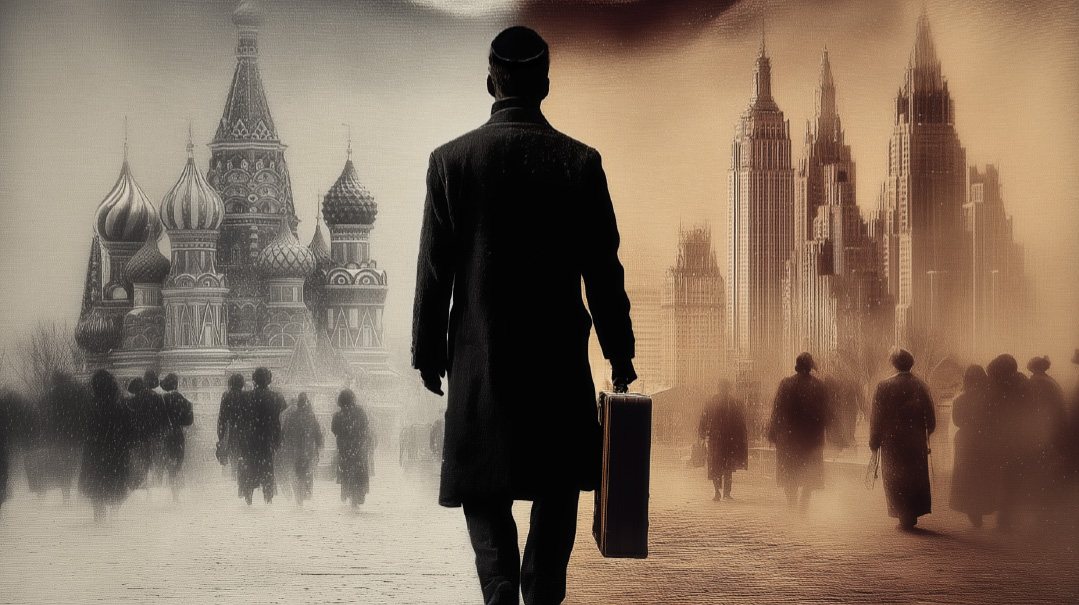
My father and mother were living with my brother and sister in Jaroslaw, Poland, when the Germans and Russians invaded in September 1939. As the Germans approached Jaroslaw, my parents tried to conceive a plan to keep the family safe. There was no time to waste. In the middle of the night, they hired a wagon, loaded in my brother and sister and some basic belongings, including their sewing machines, then swiftly fled eastward to my maternal grandparents in Lvov, which had fallen under Russian occupation.
As the Nazis and Soviets divided up the spoils in Poland, my parents and grandparents tried to figure out the best way to survive. Zeide was convinced that taking Soviet citizenship would give us protection in the event the Germans moved further east.
“Go to the consulate and get citizenship for the family,” he directed his son-in-law. “If the Germans come here, they will take the refugees, but they won’t dare start up with those who are citizens of the Soviet Union.”
Dutifully, my father set out for the Soviet consulate. He returned home that evening empty-handed, with an astonishing story: His late mother appeared before him at the consulate and prevented him from going in.
“She slapped me across the face,” he recounted in a daze. “She yelled at me in Yiddish, ‘Go away from here and don’t come back.’ ”
“What kind of nonsense is that?” Zeide replied. “Your mother is in the Olam HaEmes. Tomorrow you must go back there and get us Russian citizenship. It’s our only ticket to our survival.”
The next day, my father again headed to the consulate. He later reported that he was waiting his turn to go in when his mother appeared once more.
“I told you not to come back here!” she yelled, and this time she pushed him so hard he tumbled down the stairs.
“I’m not going back there,” my father declared, bruised and shaken, when he returned to Zeide’s house.
His in-laws implored him to go back again, but he would not change his mind.He and my mother talked late into the night. They decided that this strange encounter with his deceased mother could not be ignored — but it also seemed unwise to stay in Lvov as refugees. The extreme poverty and religious persecution in the Soviet Union paled in comparison to the German threat. So my parents decided to flee eastward.
RELATED CONTENT

“Sharing a smile costs you absolutely nothing, and yet it is one of the most powerful acts of chesed”
My grandfather never forgot that mountain. And now, neither will my precious son
I’m still tied to a tradition stemming all the way back to the First Temple
Me? I thought, hesitant. Who am I to write a book about the Tannaim and Amoraim?
Every year, as her yahrtzeit on 10 Iyar nears, I’m grateful again for our last goodbye