Hi, It’s the School Calling… Again
| January 13, 2026How to partner with your child’s school with clarity and calm
I
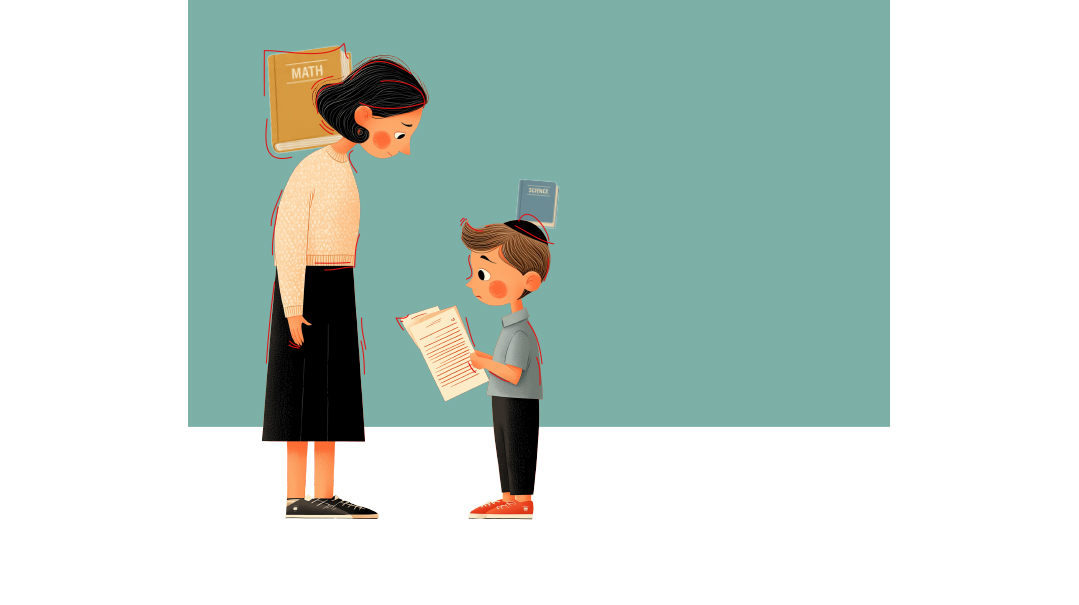
t’s the type of call every parent hopes they’ll never get. But the laws of probability suggest that if you have school-age children, there’s a good chance you’ll face a significant challenge with at least one of them that will require working closely with the school.
The process usually has phases: There’s the first call alerting you that something is “atypical” with your child’s learning or behavior, the shock that follows (which can include a storm of emotions like denial, anger, grief, and eventually acceptance), the research stage (where you speak to every specialist and read countless articles), followed by multiple — or many, many — conversations with the school to figure out an appropriate educational plan.
School psychologist Mrs. Adina Fertig is familiar with each step of the process. She has the unique advantage of understanding both the perspective of the school — she worked for the New York City public system for 11 years, and now supports families in the Cleveland Public Schools system and is employed by Agudah as an educational consultant — as well as the perspective of parents, whom she coaches in her private practice.
“Growing up is a messy process,” she tells parents who reach out to her for help navigating the IEP (Individualized Education Program) and service process, or who simply aren’t sure how to address their child’s needs in school or at home. “Instead of being caught off guard by getting ‘that’ phone call from the school, I tell them to expect it. When children are given space to be themselves and develop in a healthy, appropriate way, challenges are inevitable — and even healthy. Children are supposed to test boundaries because this is how they explore the world and eventually develop into the best version of themselves.”
Parents have no idea how normal it is to have a learning struggle, she says. “Everyone is dealing with something significant, be it emotional, social, or academic. People just don’t talk about it publicly.”
But that doesn’t mean it’s easy to hear that your child has been flagged as needing behavioral or academic intervention. “It’s natural to have a big response to that first call,” admits Mrs. Fertig. Doubt, skepticism, or outright denial isn’t unusual. Parents might (rightfully so) wonder: Is the school overreacting? Don’t children all grow at their own pace? Isn’t my child’s behavior in the range of normal? How can I trust this teacher’s/principal’s/rebbi’s expertise in this area? My child is doing perfectly well at home, so maybe this is the school’s issue?
Batsheva was blindsided the first time she got a call about her daughter Rivky, now in eighth grade. “My daughter is a spunky and talented girl with sterling middos and many friends. She has everything going for her... except for scholastic achievement. I didn’t think that mattered so much, but the principal didn’t quite agree,” she says. “They wanted me to get her a tutor starting in fourth grade. Since I believe strongly in being an active partner with my children’s schools, I jumped on board.”
A year later, the principal called again, this time pressuring Batsheva to provide additional academic support. “In hindsight, I wish I had pushed back at this point. I wish I would’ve asked: ‘Aren’t Rivky’s grades within the range of typical development?’ In every class, there’s going to be one girl who will finish the test last — but that doesn’t mean there’s something inherently wrong with her. My daughter certainly wasn’t an A student, but she was holding with the material on her level and it wasn’t interfering with her functioning. She loved going to school every day. Now we’re on the fourth year of tutors and what is there to show for it? Little progress and a wonderful child who is starting to doubt her own abilities. I feel like zooming in too tightly in one area can make any child sound dysfunctional.”
Skepticism is healthy when it’s used to honestly assess a situation. But sometimes, it can mask other harder-to-deal-with feelings, like fear and shame. Eli Jacobs* was an eight-year-old who was flagged by his yeshivah’s intervention department because he read slowly, avoided reading aloud, and couldn’t do work independently. All signs pointed to dyslexia, but his parents were in denial. “I’m embarrassed to admit how ashamed I felt to have a child with a learning disability. It took a while for me to separate my feelings from the reality of my son’s challenges,” Mrs. Jacobs shares.
Grief is another common emotional hurdle for parents. “Shifting from a preconceived vision you have for your child and their future can be challenging, and can take time to process,” Mrs. Fertig says.
Once parents have reached some level of acceptance, they usually jump into the next stage: research. The Jacobses, for instance, read up extensively on dyslexia and got their son an official diagnosis. Then, together with the school, they created a plan to move forward.
RELATED CONTENT
What happens when classroom support for struggling students creates new problems?


Four women use junk to create a magical experience for a frum audience
A collection of very strong opinions about very small things
When a husband travels regularly for work, what’s it like for the family?