Journey to the Center of Me
 | November 4, 2025
Nomi Levy circled the globe until she found her people, her calling, and herself

M
ost mornings, Nomi Levy wakes up at 5:30 a.m. — she’s a nutritionist by trade, currently working on a Ph.D. clinical doctorate.
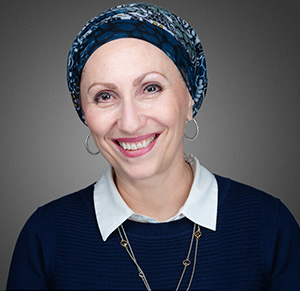
Nomi emanates the positivity and self-possession that come from being squarely centered in who she is and what she wants to do with her life.
What isn’t immediately apparent is the journey it took to get here. Nomi literally circumnavigated the world before settling in Jerusalem, moving from her birthplace in Salt Lake City, Utah, to an adoptive home in Minnesota to modeling in Hong Kong. She then converted to Judaism and married in Los Angeles before making aliyah to Jerusalem. Her peripatetic life brought her to many cultures before choosing Judaism, and to create a broad, inclusive definition of what it means to have a family.
A Child of Many Mothers
Nomi’s mother, Joy, born in Korea in 1950, wore her name well. She was a happy, positive, enterprising young woman. She married an American serviceman and moved with him to California, bringing over her aunt, three uncles, and grandmother. She and her husband divorced after a short time, and she married Nomi’s father.
“My Korean family were in some ways like Jewish immigrants to the US,” Nomi relates. “They took work in the clothing business — the shmatteh trade! — working in factories. Little by little, they became very successful and were able to buy homes near each other.”
When Nomi’s mother died suddenly, she left behind a two-year-old Nomi and her younger brother. Nomi’s distraught father saw only one option: He brought his baby and toddler back to his family in Minnesota. “He didn’t register that his siblings were busy and his parents were elderly,” Nomi says. “In the end, he just put us in foster care. We were brought to a farm in rural Minnesota. I still remember chasing chickens and running around outside.”
Two years later, they were adopted by a loving Catholic couple in Minneapolis who had never had children of their own. Mr. and Mrs. Spain offered a caring, wholesome home to the two siblings, providing them with a Norman Rockwell-style childhood complete with biking in parks, skating on the lake, and family holiday celebrations. Nomi was always aware she was adopted, but as there was another adopted kid in her class, she didn’t feel particularly at a disadvantage. In fact, she fielded slurs with panache. When a boy on her school bus taunted, “You’re adopted!” eight-year-old Nomi retorted, “I was chosen! Your parents got stuck with you!”
Nevertheless, she grew up with the knowledge that her father had given her up and started a new life with a second wife. The Korean side of her family had actually tried to locate her, but they were unsuccessful. The sense of abandonment caught up with her in high school. “I went through a rebellious period,” she admits. “It was the 1990s, and I had older parents and no language with which to communicate my feelings to them.
“For a while, things got so antagonistic that I moved in with a Jewish friend and her family for a few months. They were Reform, but I still learned a lot. The grandmother was a Holocaust survivor. They lit Shabbos candles, and on Rosh Hashanah I went with them to do Tashlich at a stream behind their house, which I thought was weird, but fun.” After a few months, she reconciled with her adoptive parents and moved home.
RELATED CONTENT
What happens when classroom support for struggling students creates new problems?

Four women use junk to create a magical experience for a frum audience
A collection of very strong opinions about very small things
When a husband travels regularly for work, what’s it like for the family?