Pain at the Pump
 | March 10, 2026
If the war raises prices at the pump, Trump’s political verdict will be swift
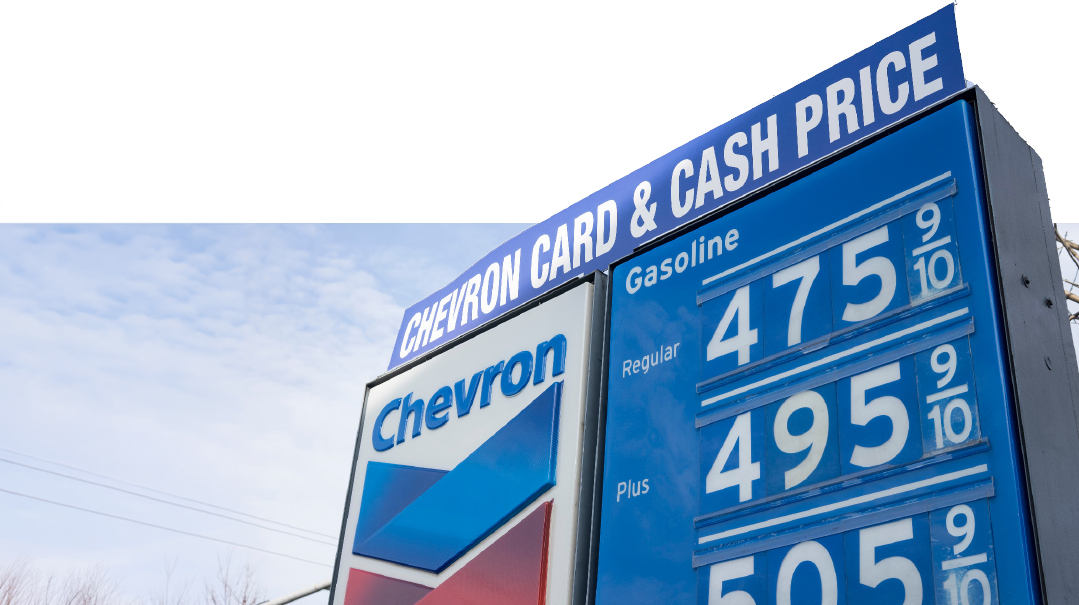
PHOTO: SHUTTERSTOCK \ TADA IMAGES
“IF gas prices go up, I’m going to be livid.” I heard this from a non-Jewish community activist say when news broke of the war with Iran. Many Americans have a different view of the war than does the Jewish community, where Tehillim were being said and discussion centered on the war’s length, scope, and impact on our families’ safety. The typical American perspective views this foreign conflict through an economic lens.
The economy loomed large as a political issue before this war, with Americans pointing their fingers squarely at the president. A CBS News/YouGov poll released before the war showed that 61% disapproved of the way President Trump is handling the economy, and 66% said they disapproved of the way he was handling inflation. According to the New York Times, the average price of gas rose 11% the week this conflict started. The stock market followed with one of its worst weeks in months. Economists the world over are fretting over GDP growth, rising oil prices, and economic fallout from this war.
With the midterms ticking closer, how do Americans feel about this economy? What will both parties do to focus on the economy with less than 250 days until Election Day? How will the war impact all of this?
The Affordability Issue
The Trump administration has had plenty of economic indicators to brag about, including the economic recovery, low unemployment, and dropping mortgage rates. With so many seemingly positive indicators, why are Americans still talking about affordability ? Perhaps because a lot of the economic signals that obsess the Washington beltway are irrelevant at a family’s kitchen table.
The unemployment rate is 4.4%, down two points from when Trump took office. This sounds important, until you realize that credit card debt is a record $1.28 trillion. More Americans may be employed but many are living from one credit card bill to the next.
Mortgage rates fell below 6% for first time in three years. But on the flip side, home prices have surged in some areas by as much as 50%. Many Americans may be able to afford the mortgage interest but not the actual home.
The stock market has achieved three consecutive years of double-digit gains. Yet 50 million Americans don’t have access to 401k plans to reap the benefits of this boom.
So how will each political party confront this issue? By blaming each other, of course.
The Blame Game
“The worst economic crisis since the Great Depression.”
“They gave us the worst inflation in the history of our country.”
Who said which? Biden actually said the first quote in his 2021 speech before Congress, and Trump said the second line in his just delivered State of the Union.
Biden played the blame game with Trump’s economy, and now Trump is doing the same with Biden’s. Although they both make some strong points, this blame game is largely ineffective. Each political party will try other approaches to carry their economic messaging to voters.
The Republican approach: According to Fox News, Trump’s team huddled in February to strategize on the economy for voters. Reportedly, one recommendation was to have Trump’s cabinet travel the country to trumpet his agenda. Trump isn’t on the ballot, which typically spells disaster for the Republican Party, and marketing his economic vision with as many surrogates as possible is the next best thing. We saw an example after the State of the Union, when J.D. Vance traveled to a competitive Wisconsin congressional district to make the case. He stood before a banner that read “Lower Prices, Bigger Paychecks.”
The challenge for the president is that the base is divided on the war in Iran, and the economy as at the center of the contention. When the war broke out, MAGA influencers talked about “America first” and the costs of the war outweighing domestic needs. It’s hard to sell the economy to your supporters with internal dissension.
The Democratic approach: Democrats love the Republican in fighting. And why shouldn’t they? They can largely sit back and allow the Republicans to fight and falter on the economy and wait for voters to make change.
The only thing that could derail the Democratic Party’s “wait and see” approach is if the far-left of their party proposes an economic agenda that remains deeply unpopular with American voters. This past week, for example, Bernie Sanders and Ro Khanna proposed a billionaire tax. Similar proposals are popping up across the country, they are often packaged together with socialist policies. Taxing and socialism are not positions that will win in purple districts and swing states.
Democrats have been gifted an internecine Republican fight, and the only way they can mess that up is by highlighting their own politically unpopular policies. And they need to pay attention to a March CNN poll that shows the party’s overall favorability staying down at record lows.
The Iran War
How will the war affect this discussion? To answer this we have to go back to Democratic strategist James Carville’s by-now-clichéd line, “It’s the economy, stupid,” that drove Bill Clinton’s winning 1992 presidential campaign. Incumbent George H. W. Bush had been riding a wave of record popularity after the US victory in the 1991 Gulf War. Eight out of ten Americans approved of his job performance. But all that vanished when the bad economy overtook Bush’s foreign policy wins.
Polls on the Iran war have been middling to negative — not nearly as popular as Bush’s Gulf war. Foreign policy doesn’t win elections; it didn’t help Bush, and it won’t help Trump in the midterms. Will it hurt? If the war worsens the economy, yes. The Strait of Hormuz is a critical passageway for oil and natural gas. If it closes, it will send gas prices skyrocketing.
Foreign policy may dominate headlines, but pocketbook issues still dominate the ballot box. If this war reaches Americans through higher prices or tighter budgets the political verdict will be swift.
(Originally featured in Mishpacha, Issue 1103)
RELATED CONTENT
What must Trump do to recalibrate? Is there enough time to right the ship before the pivotal midterms?

Immigration has been tearing at American politics since the birth of the nation
Foreign policy has always been a difficult sell for the American public, and Trump’s current trifecta is no different
Will Kamala Harris again be the Democratic nominee in 2028 or be forced into permanent political retirement?