The Purim War
 | March 10, 2026
The current fighting is from the Israeli point of view just the latest round — and hopefully the last — in the war going on since October 7
AT
no time since the Purim after the liberation of the death camps have contemporary events so resonated with the events of the Megillah as this past week. In the Landsberg DP camp on Purim 1946, survivors staged a carnival at which they hung effigies of Hitler in a myriad of positions, burned Mein Kampf, and imitated Hitler’s speeches predicting no more Purim celebrations for the Jews.
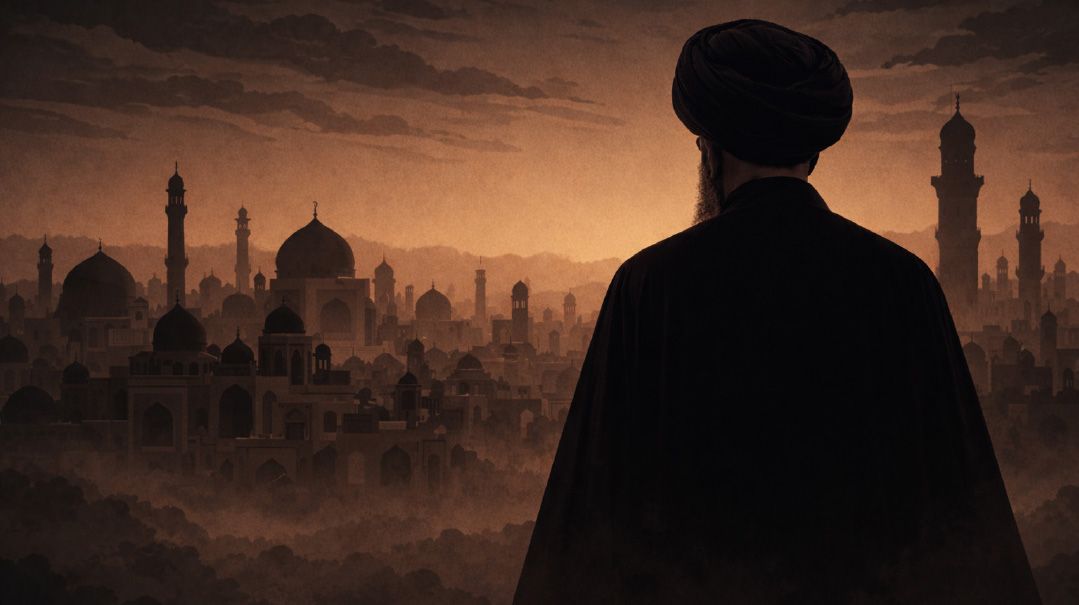
And in Israel last week, innumerable memes of the late Supreme Leader Ayatollah Khamenei, who met his end on Shabbos Zachor, appeared to great merriment. Khamenei is said to have awakened every morning in a dark mood upon finding that Israel still existed. Truly, a Haman for our times.
One of the great lessons of the Megillah is that the antidote for Haman’s description of the Jewish People as “dispersed and divided” is Jewish unity. After Mordechai tells Esther that she should not think that she will escape a decree against the Jewish People because of her privileged status, she accepts her mission and replies to Mordechai, “Gather together all the Jews in Shushan to pray for me...”
Nothing brings out warm feelings among Jews to a greater extent than having a threat of extermination hanging over their heads. That was certainly true in Israel last week. One heard nary a criticism of Operation Roaring Lion. (The Israel Democracy Institute put support for the war at 93%.)
We encountered our neighbors in building bomb shelters at odd hours and previously unseen attire, in a spirit of camaraderie, with at least one guitar to lighten the mood. My entirely observant building is not, admittedly, a cross section of Israeli society. But we do wear a variety of head coverings. Last week, such distinctions were unknown.
Just another reminder for me of how blessed I feel to live in Israel, where common threats do, from time to time, bring the entire Jewish population together. That could never happen in America, where the number of Jews describing themselves as Zionists — i.e., as supporters of Israel’s existence — barely outnumbers the percentage describing themselves as anti- or non-Zionists among the 18- to 34-year-old cohort.
I don’t think I could bear daily exposure to news stories, like one profile last week of a 20-something Jewish media wunderkind behind Mamdani’s media campaign, and those of numerous other anti-Israel figures.
I’LL LEAVE TO OTHERS comparisons between Donald Trump and Achashveirosh. But one thing is clear: No president besides Trump would have ever bombed Iran’s three principal nuclear sites last June or launched Operation Epic Fury last week. He has been a consistent anti-Islamic Regime hardliner since the takeover of the American embassy in 1979, the unmistakable first declaration of the Islamic Regime’s purpose: Death to America. Even back then, decades before he had his eye on the presidency, in television interviews while the embassy hostages were still in captivity, Trump decried the humiliation inflicted upon America and advocated for military intervention against the regime.
Donald Trump is like Chushim ben Dan. The latter was deaf, and thus uninvolved in the negotiations between the brothers and Eisav over the burial of Yaakov Avinu. All he saw was that Eisav was blocking burial in Mearas Hamachpeilah, and he chopped off Eisav’s head. Similarly, Trump has proven deaf to the foreign policy establishment, which warned against moving the American embassy to Jerusalem, never even contemplated Israel entering into agreements with the Gulf states, and consistently counseled against attacking Iran’s nuclear facilities.
Every American president over the last quarter-century has declared that Iran must never be allowed to obtain nuclear weapons, but none has done much to prevent it from doing so. Even as Iran has been responsible for the deaths of thousands of Americans, the foreign policy establishment has shown no interest in solving the Iran problem, but only in managing it by kicking the can down the road, as if the problem might go away rather than worsen.
Except for Barack Obama, of course, who had the brilliant idea of turning Iran into a regional hegemon, with a nuclear bomb. He viewed Israel, not Iran, as the destabilizing power in the Middle East, and sought to balance it by building up Iran. His partner in fashioning US policy toward Iran, deputy national security advisor Ben Rhodes, was nicknamed “Hamas” in the administration for his fervid hatred of Israel, despite being Jewish.
The JCPOA entered into by Obama in 2015 left Iran’s ballistic missile program intact, provided it with billions of dollars with which it could build up its terrorist proxies around Israel, and allowed its nuclear research to continue unimpeded. And it did no more than to push Iran’s development of a nuclear bomb ten years down the road. Annex III even committed the US and EU to protect Iran against threats to its nuclear program by Israel.
From the outset in 2015, Trump campaigned against the JCPOA as “the worst deal ever negotiated” and predicted it could lead to a “nuclear Holocaust.” By May 2018, he had withdrawn from the JCPOA and instituted maximum pressure sanctions against Iran, after being briefed by Prime Minister Netanyahu on the contents of the Iranian nuclear archives purloined by Israel. In January 2020, he assassinated Qassem Soleimani, the commander of Iran’s expeditionary terror unit and the main figure orchestrating the ring of fire around Israel.
Biden returned to the Obama policies, and let Iran out of the sanctions box created by the first Trump administration. And when Israel prepared to retaliate for an Iranian strike in October 2024, the Biden administration warned Netanyahu not to strike Iran’s nuclear facilities. Candidate Trump was incredulous. And upon coming into office a second time, he immediately returned to heavy sanctions against Iran.
Nor would the current war with Iran have taken place without the laser focus of Binyamin Netanyahu on the issue over a period of thirty years. It was he who kept reminding American presidents of the post-World War II agreement between FDR and Saudi Arabia’s King Abdul Aziz Ibn Saud of cheap Saudi oil in return for American protection of the kingdom. The chief purpose of the modern US Navy, writes Lee Smith (“The Trump-Bibi Bond,” Tablet, July 7, 2025), was to give America ultimate control over global oil markets by ensuring the free flow of cheap Gulf oil to its chief trading partners.
But a nuclear Iran, or even one with ballistic missiles capable of striking Europe, Asia and eventually the US, could close the Strait of Hormuz, through which one-fifth of global oil passes, and empower China via its chief Mideast ally.
In his annual addresses at the UN and in four speeches to Congress, Bibi always made clear that a heavily armed Iran was not just a threat to Israel but to the entire world. True, Nazi Germany killed six million Jews, he said, but sixty million people perished in the great war unleashed by the failure to confront Nazi Germany earlier, which allowed it to keep building its strength.
And Donald Trump agrees, making the Trump-Bibi relationship the most significant one between world leaders since Churchill and FDR. After the 12-Day War last June, Trump wrote, “Bibi Netanyahu was a warrior, like perhaps no other in the History of Israel.” And he has been equally fulsome in the current operations, demanding (albeit inappropriately) once again a full pardon for Netanyahu so he can run the current war without distractions.
WEST POINT’S JOHN SPENCER notes that America’s repeatedly declared goals in the war all center on preventing Iran from being able to wreak havoc on world oil supplies and thereby on the world economy. Those goals include ending Iran’s pursuit of nuclear weapons, destroying its missile capabilities that shield its nuclear ambitions, and eliminating its ability to threaten global commerce through the Strait of Hormuz.
Conversely, the Islamic Republic has banked on being able to create sufficient havoc in world oil markets to force the US to call off its operation. That is the context for the Iranian drone attack on the United Arab Emirates’ Fujairah Oil Industry Zone on March 3. The industrial zone, the world’s third-largest bunkering port for oil tankers, was built to allow the passage of oil through a pipeline from Abu Dhabi’s oil fields to waiting tankers, without transiting the Strait of Hormuz. Iran seeks to cut off all such alternate routes, or to make insurance rates prohibitively expensive.
Though regime change would be ideal, it is not one of the declared goals of the current war, and it might not be necessary to secure the flow of oil and prevent Iran from sowing regional chaos through proxies and destabilizing neighboring countries.
In Spencer’s view, the joint US-Israel offensive has gone a long way to breaking the tools accumulated by Iran for pursuing its strategy. By wiping out so many top leaders at the outset, Iran’s ability to coordinate a coherent strategy in response was dramatically lessened. The remaining leaders must spend as much time thinking about survival as strategy.
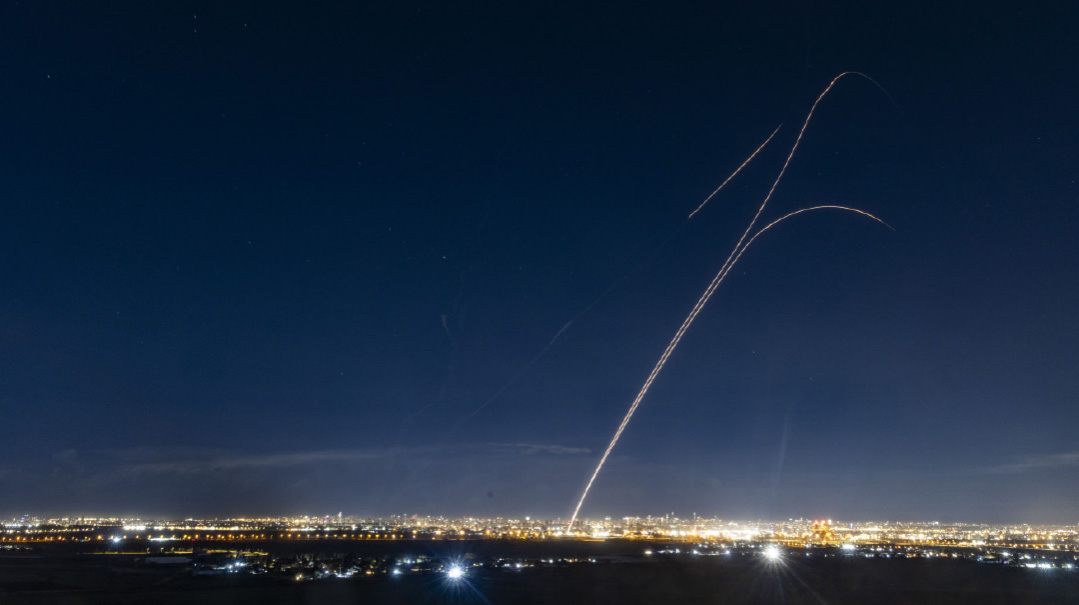
Iranian missile launches have declined 90 percent since the beginning of the war, while drone activity has decreased by 80 percent, all of which indicate the success of the US and Israel hitting launch sites, storage facilities, and production infrastructure. At least 30 Iranian naval vessels have been destroyed, including the fast attack craft and drone launching platforms favored by the IRGC to threaten regional shipping.
The network of regional proxies, naval capabilities, missiles, and drones built by Iran to deter attacks lies in tatters. To quote Spencer: “It wanted deterrence. It is getting disarmament.” Much can still happen, as the drone attack on Fujairah demonstrates, but at the seven-day mark one would not bet on the Islamic Regime surviving with anything like its previous ability to threaten the world.
THE CURRENT FIGHTING is from the Israeli point of view just the latest round — and hopefully the last — in the war going on since October 7. That day was in many respects the nadir in terms of Israel’s ability to project power and deter enemies. The attacks launched by Hamas that day, when coupled with rocket attacks from Hezbollah in the north the next day, resulted in over 100,000 Israelis evacuating their homes, a thorough humiliation.
But since then there has been a complete nahafoch hu moment. Hamas is largely neutered, its remaining fighters in hiding underground. Hezbollah, which on October 7 possessed firepower greater than most armies in the world and many battle-tested troops, has had 80 percent of its missiles destroyed; and it has been degraded from a formidable terrorist organization, in Amit Segal’s description, to a small guerilla group. Israel has free rein over the skies of Lebanon to keep pounding them. The Assad regime in Syria is no more.
Of Iran’s former regional proxies, only the Houthis remain, though they have yet to be heard from in the current round of fighting. Perhaps that is because they have already absorbed so many blows from both the US and Israel that they lack the taste for more. Or perhaps they are being held back as a trump card to be played by the Islamic Regime if its situation becomes even more desperate. Time will tell.
Meanwhile there has been another far less salutary flip. After October 7, Israel briefly enjoyed sympathy in most quarters across the globe. Now, for the first time ever, polls in the US show more Americans favor the Palestinians than those who favor Israel. (Democrats are almost uniformly hostile to Israel, with primary candidates vying with one another to demonstrate their anti-Israel creds. Republicans are for the most part the opposite.)
One hopes that the sight of left-wing Columbia students mourning the late Ayatollah Khamenei, who just months ago ordered the cold-blooded murder of more than 30,000 peaceful demonstrators, many of them university students like them, will alert many sane Americans that the supporters of Iran and before that Hamas are moral inverts. And the 100:1 ratio of protests against Israel compared to those against the Islamic regime’s slaughter of its own citizens in a two-day killing fest will open some eyes to the Jew hatred underlying much of the criticism of Israel
But in any event, if forced to choose between the world’s sympathy and the destruction of those who seek our extermination, all Israelis would choose the latter. We already know, as Dara Horn titled one of her essays, “Everyone loves dead Jews.”
(Originally featured in Mishpacha, Issue 1103. Yonoson Rosenblum may be contacted directly at rosenblum@mishpacha.com)
RELATED CONTENT

The ability to really listen to others is much more than just the gathering of information

The return of Ran Gvili was like a huge boulder lifted from the collective heart of Israel
That refusal to accept Israel’s existence is why there is no peace