Beyond the Canal
| March 10, 2026Jewish Panama may be known for wealth, but its real treasure is a Torah revival
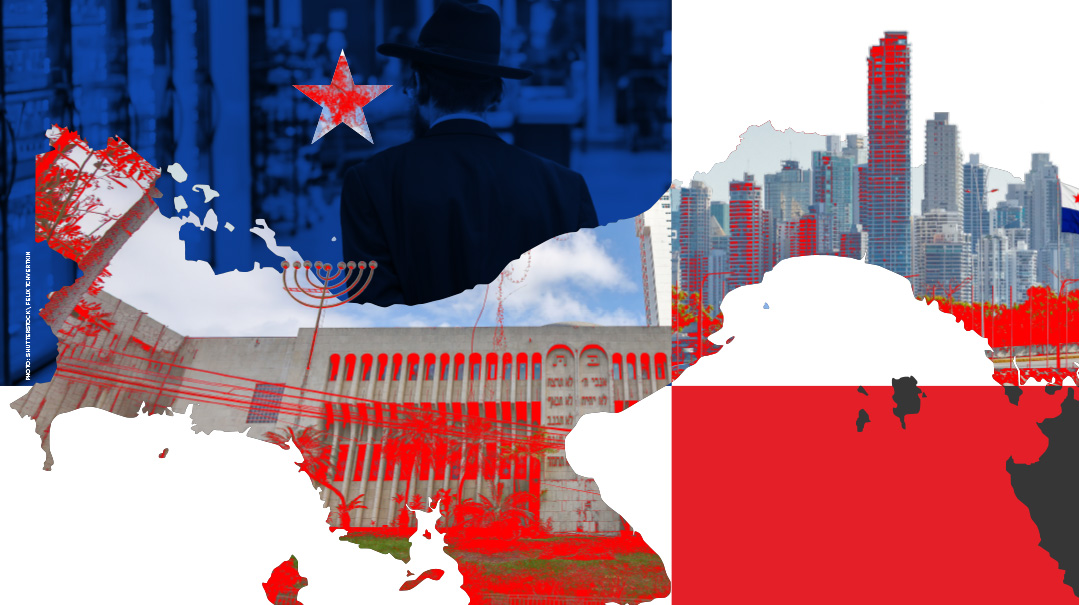
Photos: Dirshu-Panama
Thirty-five years ago, when Rav Dovid Hofstedter joined efforts to save Toronto’s Torah institutions, people told him, “Go to your generous brothers in Panama.” And now, says the founder of Dirshu, “just look how the Ribono shel Olam repaid Panama. It’s become its own bastion of scholarship.” Today, Jewish Panama might be known for its outsized selection of kosher restaurants, but the real story is an ongoing Torah renaissance
AT first glance, a visitor to Panama sees exactly what he’d expect from this Central American country, starting with year-round 90-degree temperatures and old-time Latin American charm, colonial-era hotels and endless opportunities to buy the country’s signature straw hats. But a broader look reveals some surprising elements, starting with the currency, US dollars, despite Panama’s status as an independent nation. Then there’s the enigma of the mezuzah on each door of the Miraflores Visitor Center for tourists looking to learn more about the isthmus’s famous canal, and Panama’s outsized selection of kosher restaurants, all of which provides clues to the threads that make up the fabric of this growing community.
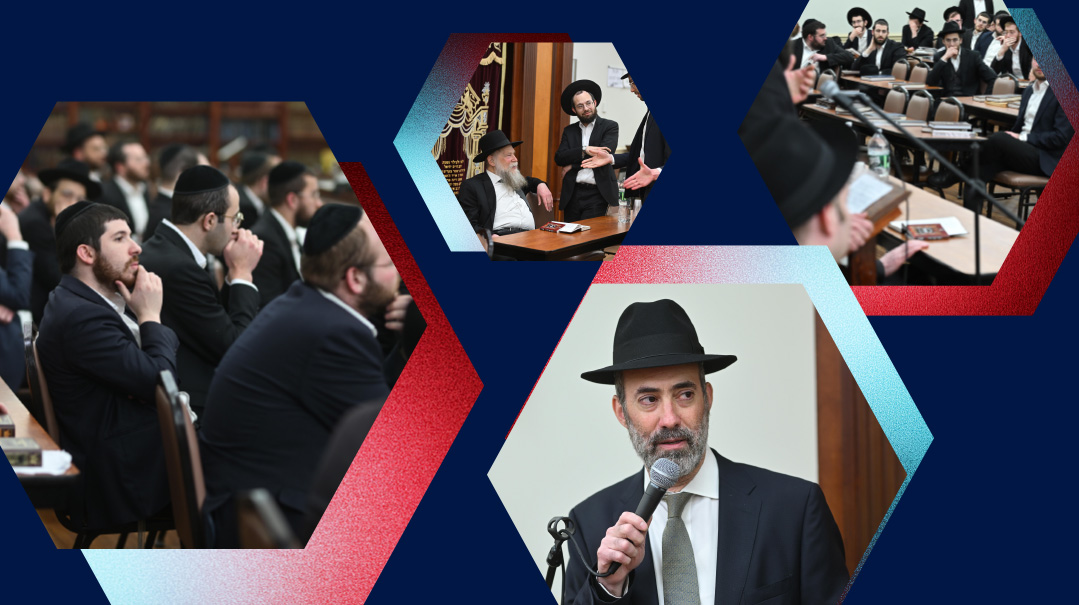
But these curiosities aside, the community’s most substantive accomplishment is a thriving cohesive kehillah in the midst of an ongoing Torah renaissance, which was prominently showcased at the recent Dirshu event, “Maamad Ahavas Hatorah.” The event drew together hundreds of local yeshivah talmidim, kollel avreichim, and balabatim for an evening of inspiration. While the event was officially billed as a siyum on Maseches Pesachim in Dirshu’s Amud Yomi program, which has many members in Panama, it was also a tangible statement of how far the community has come.
Rabbi Eli Mansour, who leads the Edmond J. Safra congregation in Flatbush, was the guest speaker, and he reflected back on his first visit to Panama 25 years ago, when Chacham Levy, the first rav of the community, brought him to deliver a talk encouraging people to take up more basics of mitzvah observance.
“There were no kids in white shirts there, no talmidei chachamim, no Jewish music. Who would believe that this is only one generation later?” he said. “Now the discussion is daf yomi or amud yomi, different sh’eilot.”
Rabbi Monsour went on to sum up the transformation with a quip Chacham Levy had shared with him all those years back. “He said, ‘You know what Panama (in Hebrew letters) stands for? Po nimtza mamon harbei.’
“If he were here tonight, he would have said [it stands for] po nimtza matan haTorah.’ ”
Torah Renaissance
Shevet Achim, Panama City’s central shul, has a nondescript exterior, but inside it brims with life. A steady flow fills its beit medrash for a succession of minyanim, and afterward, attendees can enjoy a breakfast of rolls, cheeses, vegetables, and of course, fresh brewed Panamanian coffee, one of the nation’s prized exports.
In the majestic beit haknesset, a bar mitzvah is underway. The stream of guests arriving to join the simchah aptly showcase the community’s diversity, with a few arriving in yeshivish garb and others donning a yarmulke as they enter, though most appear somewhere between those two poles.
The fact that they are all headed to one simchah says a lot.
“There’s something like 35 percent of the community that’s what you could call full dati, and others who are not, but we all respect each other, and we are all one community,” says David Moshe Hanono, a local askan who heads a logistics company.
Just a day earlier, a group of about a hundred gathered at the community’s busiest shul, Ahavat Sion, to inaugurate a new beit medrash inside the cavernous complex.
There, too, the crowd was diverse, spanning all ages, and while most fit the mold of typical Sephardim from Flatbush or Deal with a hint of Latin American spice, several of the younger attendees’ attire bore the mark of the broader yeshivah world.
Ahavat Sion stands as an apt symbol for a community that has grown but stayed tightly knit. Each Shabbos, it hosts nine separate minyanim from haneitz to 9:30 in the morning. Several thousand daven there on any given Shabbos.
One especially unique minyan is its “minyan yeshivati,” a program that runs through Shabbos. It starts with Minchah about an hour before the zeman and Maariv at 7:15 p.m, with a seder limud in between. Shacharis is at 7:15 a.m. followed by another seder until noon, with more time to learn before Minchah. It draws some 200 attendees.
“I pray where Torah is. My shiur is here now, so I’m here,” says Moshe Harari, a businessman and community leader who attended the event at Ahavat Sion. “We all live close by, and even with so many minyanim in the same building, we’re still one community, everybody connects.”
One key player in the country’s Torah revolution is the indefatigable Rabbi Eli Avram. An Ashkenazi transplant from Venezuela and talmid of Yeshivas Ner Yisroel and yeshivos in Eretz Yisrael, he was brought to Panama 21 years ago by Chacham Levy, the kehillah’s first rav, to raise the community’s commitment to Torah.
“He gave me the hadrachah and the brachah. He said, ‘See what we’re missing and you’re going to develop it,’ ” says Rabbi Avram. “It’s on my mind until this day.”
Running a business while spearheading learning programs, Rabbi Avram’s seemingly endless energy, charisma, and warmth slowly made inroads. An early project was shiurim for girls, who eventually went to study in seminaries in Eretz Yisrael and returned to plant a rising generation of Torah-committed families. The shiur began with five and grew to 70. Parallel shiurim started later for high school boys had a similar impact.
Rabbi Avram also began a shiur which grew into the community’s largest single chaburah, with around 50 people learning with the Kinyan Mesechta program.
“If you farher my guys, you won’t believe what they know,” he says. “My goal is every single learning program that’s out there — we want it here.”
A turning point in the movement was a series of Yarchei Kallah trips Rabbi Avram led to Lakewood’s Beis Medrash Gavoha.
“BMG gave us red carpet treatment and I brought in the best speakers I could find,” he says. “My idea was to give people a taste of what it means to learn in yeshivah and then build on the experience.”
After each Yarchei Kallah, Rabbi Avram followed up, forming new chaburos and shiurim and expanding existing ones. One early-morning group finished all three “Bava” masechtos over about nine years. Rabbi Avram texted daily reminders to his talmidim under the heading “Wake up Bava.”
Working with some participants’ schedules was more difficult than for others, but Rabbi Avram was up for challenges.
“I learned with someone [on a BMG Yarchei Kallah] who never learned in yeshivah before, but he was so excited about it, he didn’t move from his seat when we were there,” he says. “When I followed up, he said he was ready to start learning, but the only time he can do it is at 5:30 a.m. I said, ‘Sounds great,’ but really didn’t know what I was going to do for him. For a week I came to learn with him every day at 5:30 and then found a yungerman to take over. The kvius is still going 15 years later.”
Dirshu’s varied programs also made inroads with many of Panama’s balabatim, including a shiur in hilchos eiruvin, and one of Rabbi Avram’s evening shiurim is an amud yomi chaburah.
“This shiur remade Panama,” says Rabbi Gabriel Hezekiah, who heads Dirshu’s programs in Panama. “Right away, you can pick out balabatim who go to Rav Eli’s shiur who are involved in chazaros and in rischa d’oraysa. You’d think they all learned in yeshivos. You can see them walking around with Gemaras in hand. This is something we didn’t see here before.”
At the Dirshu siyum, yeshivah bochurim constituted a significant part of the crowd and the most enthusiastic participants in the musical performances (though there was a touch of incongruity in a crowd of Panamanian Jews, mostly Sephardim, dancing to the well-known Skverer hakafah niggun). And for the most part, the bochurim looked like they would fit in comfortably in a mesivta in the Five Towns or Passaic.
Dirshu’s founder and nasi, Rav Dovid Hofstedter, recalled his visit to Panama 35 years ago as part of an effort to save Toronto’s Torah institutions from financial crisis.
“People said, ‘Go to your brothers in Panama’… I was welcomed with open arms and kindness. Look how the Ribbono shel Olam repaid Panama,” he said. “Now the community is at a crossroads… with an opportunity not only to be a bastion of tzedakah v’chesed, but and ir v’eim b’Yisrael in Torah.”
“Never before did Panama have such a large event solely to express ahavat haTorah. All the community’s rabbanim, Sephardim, and Ashkenazim, sat together at one dais, danced together on one stage,” says Rabbi Hezekiah. “It was a real chizuk for the community.”
While Dirshu has significant operations in Panama, celebrating a siyum, or even promoting its programs, was not the event’s main goal. “Dirshu wasn’t just started as a learning program with bechinos, it’s a whole integrated system to unify people and build a kehillah based on Torah,” said Rav Hofstedter. “Part of the enthusiasm we saw here is about becoming part of mishpachas Dirshu.”
The weakening of traditional kehillos makes Dirshu’s macro-goals important even in large established Torah centers, Rav Hofstedter says, but in smaller ones, the strength it lends is felt far more.
“In a place like Panama, you can feel the chizuk it gives them. Especially in communities that are more removed, it means so much to them and to their youth to be connected to the olam haTorah.”
The morning after the siyum, Rabbi Avram led Dirshu’s nasi on a tour of Panama’s cheder, Beit Yaakov, and mesivta, all built in a complex next to Shevet Achim. It was a particularly poignant tour considering the inherent connection; creating a cadre of balabatim engaged in serious learning helped set the stage for a parallel development, a new set of Torah-oriented schools.
Dozens of boys, children of talmidim from his various shiurim and learning programs, approached Rabbi Avram, who returned the greeting with a hug, referring to them as his “eineklach.”
“This mahapechah is part of what helped us put together the Talmud Torah and the Bais Yaakov,” says Rabbi Avram. “Sometimes I close my eyes and open them and don’t believe the change it’s all made.”
A highlight of the visit included a grade school class singing much of the first chapter of Mishnayos Maseches Beitzah from memory.
Guiding Light
The single figure who looms largest in the story of Panamanian Jewry is Chacham Sion Levy ztz”l, who served as its chief rabbi from 1954 until his passing in 2008.
Chacham Levy hailed from a Moroccan family and grew up in Eretz Yisrael. He was part of the “wonder class” in Yeshivah Porat Yosef, together with Chacham Ben Tzion Abba Shaul and Chacham Ovadiah Yosef, whom he learned with b’chavrusa.
One of his first moves upon arrival in Panama was to establish the Sephardi minhag Yerushalmi as the kehillah’s nusach.
“Panama had people from Halab, from Lebanon, Egypt, Iraq, Morocco, all over. So Chacham Levy said, ‘I come from Jerusalem and Jerusalem is the center of the world. We’ll use the Yerushalmi nusach,’” says Mr. Harari. “He did such a good job that Chacham Ovadiah Yosef said, ‘If you want to know the customs of Jerusalem, go to Panama and look what they do.’ ”
Life wasn’t easy for this talmid chacham when he took on the position in a remote community with nearly no Torah institutions.
“All you see took a lot of effort from our rabbi. He pushed very hard, and we still feel his energy here,” says Mr. Nissan Bassan, former president of Panama’s Jewish community. “He had major mesirut nefesh. Chacham Levy wasn’t just the rabbi, he was the beit din, the shochet, the mohel, and the chevra kaddisha… He was like a small-town doctor, knew all the families and knew all their problems.”
Taking stock of all that was lacking in Panama’s Torah observance, Chacham Levy decided to make kashrus his initial battle flag.
“Kashrut was very fundamental to him because he believed that people who eat kosher become a kli for kedushah,” says Mr. Harari. “He gave it a lot of attention and it worked.”
His efforts bore fruit; today the vast majority of Jews in Panama, even those who aren’t fully observant, keep kosher homes.
Another indelible mark Chacham Levy left on Panama’s Jews was the sense of community, irrespective of their levels of observance.
“Rav Sion Levi didn’t want an extreme right group over here and an extreme left over there. He wanted us all to be one community and that’s it,” says Mr. Harari.
As time went on, Chacham Levy began planting additional seeds to develop Torah chinuch, and some 30 years ago, brought the first kollel to Panama.
Almost 20 years since his passing, discussions of the community’s Torah growth still circle back to the revered Chacham.
“We try to keep the minhagim of Rav Sion Levy,” says Mr. Hanono. “He could be very strong with people, but it was with substance and with righteousness. The next day, he could hug you, it was all with lev tov.”
Even with Chacham Levy at the helm, for much of his tenure, Panama was hardly a model Torah community. The city had thousands of Jews, but only one daily minyan with 30 to 40 attendees. For a while, they left out chazaras hashatz, to allow attendees to rush off to work.
The community’s first Jewish school, the Alberto Einstein Institute, was jointly founded by the Ashkenazi Beit El and Panama’s small Reform congregation, but Shevet Achim eventually took a role on its board as well. The school, which still exists today, gave children a sense of Jewish identity. In after-school lessons they learned some basic knowledge of Chumash and tefillah, but its curriculum did not include Gemara or other core areas of limud haTorah.
When Rabbi Eli Avram came to the country 21 years ago, he built on the foundations Chacham Levi had set. While observance had improved significantly, Torah study was not part of many people’s lives.
“The shul had one incomplete Shas and a copy of Lekach Tov, that was it,” he says. “There were no two copies of the same Gemara to have a chavrusa. Now that same shul has three batei medrash and baruch Hashem, they’re all packed with people learning.
That change took time and spanned several stages. One key element was the construction of the Ahavat Sion shul, which was completed in 1999. The shul was built in the Paitilla neighborhood, where most of the Jewish community lives, and was a half-hour walk to Shevet Achim in Punta Pacifica.
“Chacham Levy came to Ahavat Sion the first week and said, ‘I don’t know what happened, last week we had one full shul, and now we have two,’ ” says Mr. Bassan. “That was a revolution in Shabbat, because once Ahavat Sion opened it made it much easier for people to keep Shabbat, and a lot more did.”
Decades before Ahavat Sion opened its doors, another significant event happened in the 1970s, when Shevet Achim opened a fully Orthodox school, the Hebrew Academy of Panama, known to locals as the Academia.
“My son went to the Academia, and at one point said he wants to keep Shabbat, so slowly, we changed,” says Saul Asis, a businessman and community leader who arrived in Panama in the 1970s and served as the Academy’s president for many years. “It was a common story. Originally, I would say eighty percent of the Academia was not keeping Shabbat, now almost one hundred percent of it is.”
The school itself underwent changes that reflected the gradual metamorphosis of the general community. After a few years of operation as a coed institution, boys’ and girls’ classes were separated. A faculty that was largely staffed by Israelis sent by the Jewish Agency was replaced by yeshivah and seminary graduates from Argentina and other Latin American centers. Now, many of the instructors are homegrown Panamanians.
“Children grew up with more Torah and more knowledge than us parents had. We learned in the process and families upgraded,” says Mr. Hanono. “The mentality was that we did it for shalom, so we could all eat in each other’s houses.”
Today, Panama boasts several other chinuch institutions, including Magen David Academy and its cheder-style Gan Yeladim and Beit Yaakov. Estimates say that 98 percent of the country’s Jews attend Jewish schools.
“The mosdot are on very different levels of Yiddishkeit,” says Mr. Harari. “There’s something for everybody.”
High level secular studies allowed many of today’s Panamanian Jewish business leaders to attend colleges in the United States. While many still travel abroad for university, a growing number do so to attend yeshivos, among the most popular being Baltimore’s Ner Yisroel and Kol Torah in Bayit Vegan. An equal number of girls make their way to a variety of seminaries in Eretz Yisrael.
“We have a lot to learn from the Jewish world at large, and now we want to be like a sponge,” says Mr. Honono. “We’re doing pretty well, but there’s always better.”
A third key element to Panama’s Torah renaissance was a small kollel founded some 30 years ago by Chacham Levy. Beginning with five avreichim and a rosh kollel from Eretz Yisrael, today, the movement has come full circle. No longer does Panama rely on imports to light the fire of limud haTorah. A spacious beis medrash adjacent to Shevet Achim is filled by dozens of native Panamenian kollel avreichim. A glance at one table showcasing a Gemara Gittin and copies of Chiddushei Rav Nachum [Partzovitz] and Shiurei Rav Shmuel [Rozovsky] testify to the level of study.
“Rabbi Levy always wanted Panama to have its own homebred rabbis,” says Ramon Yohros, an importer and restaurant owner. “Before everyone came from outside. Now we’re self-sufficient, which is a big change and a big improvement.”
Jewish Routes to Panama
The core of today’s Panamanian Jewish community has its roots in a wave of immigration mostly from Halab, or Aleppo, Syria, who came to the isthmus in the 1920s and 30s. Others came from Morocco, Turkey, and other Arabic lands — some by way of Eretz Yisrael or America.
As often happens, one family member’s migration often led to more, establishing some of the community’s founding clans.
“My father came from Halab, but we were born in Israel. My father wasn’t happy there and we had family here, so he told us, ‘Go look for a future in Panama,’ ” says Saul Asis.
Panama’s first organized Jewish congregation, Shevet Achim, was founded in 1933. A handful of dedicated individuals struggled to keep Shevet Achim functioning and procure kosher meat, wine, and other staples.
A lack of Jewish education played a role in a decline in observance, but the strength of Sephardic communal ties minimized assimilation and intermarriage.
Mr. Hanono says that even though there is little antisemitism in Panama, Latin American exclusionary culture also helped preserve the community.
“Even though my children and grandchildren were born here, they will never see us as Panamanian,” he says. “That’s the way it is, but it’s kept the community more united and more Jewish.”
World War II brought an influx of European Jews to Panama who eventually founded Beit El, which remains the community’s only Ashkenazi shul.
In the 1960s and 70s, as life for Syrian Jews became progressively harsher, a new wave of immigrants made their way to Panama.
The last 20 years brought yet another wave of Jews migrating from Uruguay, Columbia, and Venezuela, the last two accelerated by deteriorating conditions in those two nations.
Presently, Panama’s Jewish community stands at somewhere around 25,000, in a nation of around 4.6 million. While recent immigration brought more Ashkenazim, Sephardim still compose the lion’s share of the community, with that nusach literally and figuratively defining Jewish life.
Troubled Waters
The history of Panama is inextricably intertwined with its most famous feature, the Panama Canal. The country was first charted by Spanish explorers in the 1500s, most prominently Vasco Núñez de Balboa, who crossed the isthmus and discovered that the Pacific Ocean was on the other side of the narrow land strip. His find continues to define Panama’s importance, and the nation bears many monuments and sites named for Balboa.
Spain ruled Panama until the 1820s, after which neighboring Colombia took over. The next 80 years were punctuated by frequent Panamanian attempts to break free. Ultimately, its geography would lead the way to nationhood.
For hundreds of years before the canal was built, Panama was a center of trade. Merchants sent cargo over land, handing goods from ships docking on its Pacific coast to ones on the Atlantic side. In the late 19th century, as engineering methods advanced, talk began about building a waterway to connect the two oceans. A French attempt that began in the 1880s failed.
Early in his presidency, Theodore Roosevelt set his sights on making the canal a reality. One impediment was that America did not trust volatile Colombian rulers to serve as custodians. The solution was to back Panamanian independence, and in 1903, that came to fruition; in 1914, the canal opened for shipping traffic.
US involvement left a deep mark on Panama, most palpably in its continued use of dollars. The road from Panama City to the canal is lined with buildings that once housed American military bases that facilitated US control of the waterway until control was gradually handed to Panama between 1977 and 1999.
While a wonder of architecture and a game changer in world trade, the canal isn’t much to look at. Visitors only see a channel of water broken up by metallic locks, with most information gained through the IMAX movie shown inside the visitors’ center.
For decades, Panama benefited from stable government and relatively low crime. But there were bumps in the road.
In 1989, President George H.W. Bush ordered a US invasion of Panama to depose Manuel Noriega, a military dictator deeply involved in drug trafficking who had become increasingly hostile to American regional interests. In the ensuing chaos, businesses, including many Jewish-owned ones, were hit by mass looting.
“You could get anything on the street, a TV, an AK 47,” recalls Mr. Yohros. “No one had war insurance, and a lot of people got hit very hard. But the economy came back very fast. Panama is a resilient place.”
The operation was successful quickly, but involved extensive bombing around Noriega’s headquarters, killing hundreds of people. While many would have preferred a more surgical operation, Jews and the country at large were glad to be rid of Noriega.
“Nobody likes to be invaded,” says Mr. Yohros. “But it was important for Panama to be rid of him. If not, who knows how long he would have stayed — look at Venezuela. Afterward, Panama grew a lot. I would say we were lucky.”
Another communal trauma was a 1994 terrorist attack that brought down a small plane that took commuters between Panama City, on the Pacific side, and Colon, on the Atlantic. Twelve of the 21 victims were Jewish, and the act was traced to the Hezbollah cell responsible for the AMIA bombing in Argentina the same year.
“It was a wake-up call,” says Mr. Bassan. “Since then, security has become very important for us.”
A trip to any shul in Panama gives a quick lesson of how seriously the wake-up call was taken. Each is patrolled by armed guards. Locals only enter after showing their IDs, and visitors need to be screened and registered with the Departamento de Seguridad Institucional. Failure to present one’s assigned code upon coming to shul will cause a holdup, if not prevent entry altogether.
Rags to Riches
While today Panamanian Jewry is renowned for its wealth, that wasn’t always the case.
Though shielded from most of the upheaval that shook world Jewry in the mid-20th century, life still wasn’t easy for most Jews in Panama at the time. Most struggled to eke out a living as shopkeepers and other lower-level jobs.
“They were far from affluent,” says Mr. Bassan. “My family had a small store with seven children living upstairs.”
The community’s eventual financial success was largely a product of the Colon Free Trade Zone, a duty-free port aimed at encouraging re-exportation based in Panama. When it expanded in the 1970s, many members of the community opened businesses based in the zone. The common refrain of the Panamanian Jewish entrepreneur is that his business is “shmattes,” a Yiddish term that has become part of the vernacular in this very Sephardi community. Generally, they mean they import clothing from China and other locations in East Asia to the Colon zone and distribute it from there throughout Latin America.
“Jews are hard workers. We came with nothing but ambition and vision,” says Mr. Asis. “With the dollar and the canal, Panama is a place with a lot of potential. It’s a good quiet country, with very little antisemitism. It has the free zone, which is very unique. The community saw these opportunities and did well.”
Despite the standard tensions that come with business rivalry, Panama’s Jewish business class say relations have remained good with non-Jewish competitors and the population at large, including the country’s Muslim community, who are also players in the free zone.
“It all came from shamattes in the beginning, but now we’re in banking, medical, insurance, and we’re highly respected in the market,” says Mr. Hanono. “We get along very well. We respect them and they respect us.”
Along with rising financial status, Panama’s Jews became important parts of the nation’s institutions. Mr. Honono is but one case in point, having led Panama’s Red Cross for 28 years. Even stewardship of the country’s iconic Miraflores Visitor Center overlooking the canal is in the hands of members of the Jewish community, which explains the mezuzahs on each of its doors.
Kosher Destination
No profile of Jewish life in Panama would be complete without giving honorable mention to its prowess on the kosher food scene. There are about 40 kosher eateries, ranging from elegant restaurants to cafés. To put that ratio in context, Lakewood has a similar number of food establishments with around five times Panama’s Jewish population.
The Panamanian kosher restaurant boom began about ten years ago and only accelerated with time.
“People started opening restaurants here and each one became better than the next, they kept upping the ante,” says Ramon Yohros, co-owner of Adama, one of Panama City’s premier kosher dining destinations. “As the industry grew, quality ingredients got more accessible, and it became easier to become part of it.”
While tourism, especially in January and February, brings in additional business, Mr. Yohros said his and other Panamanian restaurants are largely supported by local clientele.
“We’re not a big community, but the percentage of people who eat kosher is very high,” he says. “It’s a very cosmopolitan community. People like to go out and enjoy life, have a good steak and a good drink. It’s also a very young community. Our average customer base is 30- to professionals who do well and like to eat out.”
Another slice of the customer base comes from Panama’s Muslim population for whom kosher standards are compatible with halal, evidenced by a hijab-clad woman sitting in Adama’s outside dining section.
Like Mr. Yohros, most of Panama’s restaurateurs are not food industry professionals by training but shmatteh dealers who decided to try their hand at what emerged as a promising business opportunity.
Mr. Yohros and his cousin opened Adama about three years ago, building on expertise some in the family had from operating a restaurant in Columbia. Employing restaurant architects, chefs, and a manager who studied the business, they started what has become a popular destination for locals and tourists alike, offering a full line of high-quality fare amid elegant surroundings. This author claims no expertise as a food critic, but the corvina (a Pacific Sea bass) served over rice was delicious.
Panama’s food scene doesn’t end with eating out. Its Super Kosher is a huge establishment with variety and offerings that rival the largest supermarkets in major frum communities.
Tropical Fruits
While other remote Jewish communities succeeded in building up Torah and general educational infrastructure, many end up suffering from the ironic effect of its youth setting out to study in America or Eretz Yisrael, never to return.
Panama bucked the trend. Nearly all of its young men and women eventually travel abroad to either attend university, yeshivos, or seminaries — but come home to make lives in the community they grew up in.
“There’s a saying, ‘Once you drink the water in Panama, you stay in Panama,’” says Mr. Bassan. “It’s safe, the education is good, it’s a beautiful, economically strong country, and a Jew can live as part of a community. People come back to that.”
One need only look to many other small Jewish communities in comfortable and beautiful locations that struggle to retain their youth to surmise that Panama’s close knit nature likely acts as the key magnet drawing people back.
“People like living in real communities, and if you look around, it’s not something you see too often in other places,” says Mr. Harari. “We have Torah institutions here, so there’s no reason for kids to run away.”
Still, Panama’s success breeds a new set of challenges. Population growth creates obvious threats to the ideal of preserving a community under one big roof. A cadre of people more involved in Torah study living with heightened standards of observance can also lay the groundwork for more division. But an advantage Panama has is that many guiding its Torah renaissance are the same people who dedicated their lives to keeping its Jews one happy family.
“Our challenge now as we get bigger and smarter in Torah, is not to create oil and water,” says Mr. Honono. “Nowhere in the world do you have all of this in one community, we have to work hard to keep it.”
(Originally featured in Mishpacha, Issue 1103)
RELATED CONTENT
Rav Yitzchak Biton and his wife, Tamar, have become powerful symbols of faith for a nation under fire

A former financial wiz bridges the gap between virtual reality and eternal content
The Pnei Menachem's youngest child opens a rare window into his father’s mesirus nefesh for his chassidim — and for every Yid
A world where information becomes currency and the future carries a price tag