Ultimate Shelter
 | March 10, 2026
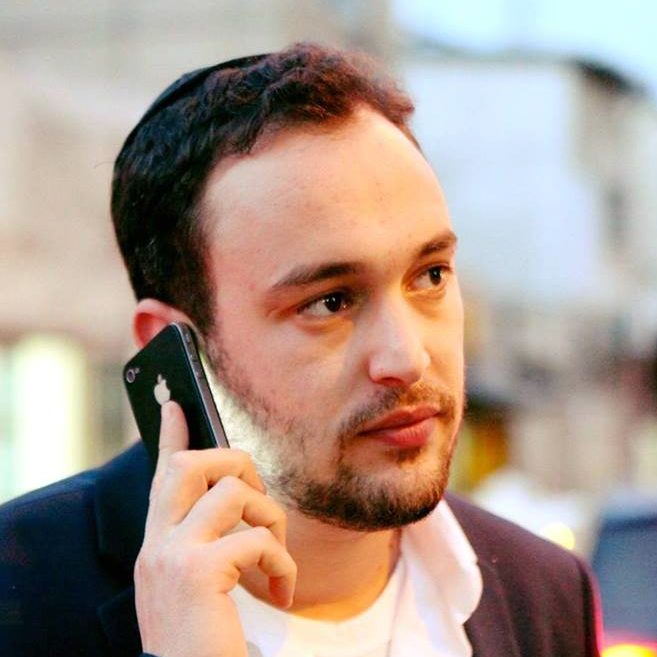
Rav Yitzchak Biton and his wife, Tamar, have become powerful symbols of faith for a nation under fire
Photos: Elchanan Kotler
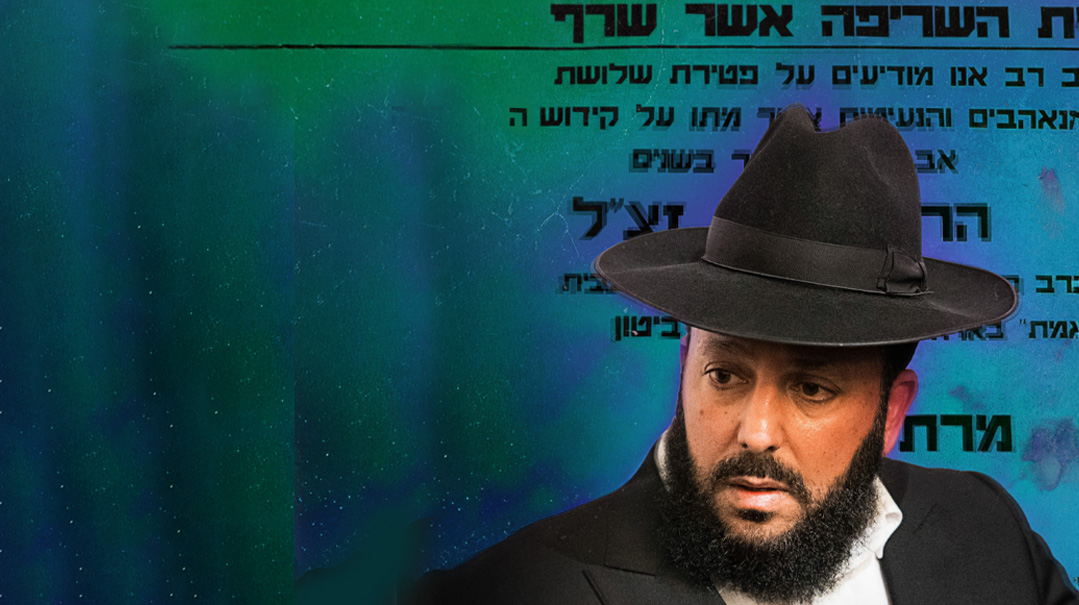
In one horrifying moment last week, Rav Yitzchak Biton and his wife, Tamar, lost three of their children — Yaakov, Rachel, and Avigail — as a ballistic missile with a half-ton warhead took their young lives and destroyed the family home. Yet precisely now, when they are bereaved and left with nothing, the Bitons have become powerful symbols of faith for a nation under fire
WE walk through the lobby of Jerusalem’s Grand Court Hotel, surprised to find it bustling even amid war. But that’s because Jews from every circle and community are making their way toward the shivah area at the end of the lobby, where the grieving Biton family is sitting: Rav Yitzchak Biton, his wife Tamar, and their youngest, four-and-a-half-year-old Racheli, who is still too young to comprehend the unimaginable loss or the realization that she is the only surviving child of her parents.
Rav and Rabbanit Biton, soft-spoken and quiet by nature, are admittedly still far from processing the event that changed their lives forever. Last Sunday afternoon, the second day of the Iran-Israel war, a ballistic missile with an enormous 400-kilogram warhead made a direct hit on a shul and shelter on Yehuda HaMaccabi Street in Beit Shemesh, leaving nine dead, over 60 injured, and an entire town reeling. The Tiferet Yisrael shul and the public shelter underneath were completely obliterated; a dozen homes were destroyed or severely damaged, and victims were trapped under the rubble of several collapsed structures. Among those who perished were three of the Biton children: Yaakov (17), Avigail (15), and Sarah (13), Hashem yikom damam.
Rabbi Biton, whose home next door to the shul was pulverized, recounts the moments of terror as the air-raid siren began to wail. “Suddenly we heard a tremendous explosion. Our house was nearly flattened from the blast — the whole ceiling collapsed. It’s really a great miracle that the three of us are alive.”
His other children had gone to the shelter, but then he looked out of what had been the window and saw smoke rising above where the shul had been standing just seconds before.
Reb Yitzchak immediately ran to the scene to search for his children. “The shul had completely disappeared — nothing was left. The shelter was also destroyed. From the amount of smoke and fire, I understood what had happened, what my heart couldn’t bear to register.”
Even the most experienced ZAKA and other rescue personnel struggled to comprehend the scene, and before all the victims were identified, Rav Biton says he could do little but daven.
“The children were listed as ‘missing,’ and all I could do was pray to Hashem and beg for mercy,” he says. With so many bodies burned or buried under rubble, the identification process was long and complicated, with the Biton children being among the last confirmed.
During our visit, we sit beside Beit Shemesh mayor Shmuel Greenberg, who had spent the past week accompanying the families affected by the disaster. Greenberg, who arrived at the site just minutes after the missile strike, encourages Reb Yitzchak to reconstruct the moments when he realized the magnitude of the catastrophe.
“The truth is, I didn’t want to go to the bombed-out shelter,” Reb Yitzchak says. “I didn’t want to believe that this had happened. But my wife urged me to go there.” Of the nine people killed, two were in the shelter (30 people who were in the packed shelter survived), one was at the entrance, some were on the staircase coming down, while others were right outside.
“Over the week, we accompanied the families while also caring for hundreds of evacuees whose homes became uninhabitable and who were placed in hotels,” says Mayor Greenberg. “This is an event on a scale unlike anything we’ve known, but it is our duty at this time to strengthen the home front and assist residents in coping.”
Amid his grief, Reb Yitzchak chose to send a message to the public: “HaKadosh Baruch Hu could have taken one of them, could have taken two, but apparently, He chose to take them all. I know they are in a very, very high place.”
ON
a table in the shivah area is Yaakov’s bar mitzvah album, a testament to a young life devoted to Torah and mitzvos. Reb Yitzchak takes it frequently, sharing it with visitors.
“What a pure-eyed child,” he says as he shows us the pictures. “Yaakov’s world was Torah — tefillah, love of Hashem, yearning for the coming of Mashiach and the rebuilding of the Beit Hamikdash. He was an olah temimah, a sacrifice for all the Jewish people. Questions of ‘why’ are not ours to ask.”
Rav Yitzchak Biton, a dayan in the Beit Zera kollel network that operates in Beit Shemesh, Tel Aviv, and Jerusalem, is well known to the hundreds of avreichim who are in daily contact with him. He lives Torah and halachah, far removed from matters of media and public commentary, yet he understood that from the moment the news of the terrible tragedy became known, he accepted upon himself a role he never thought he’d have to fill: to strengthen those who come to comfort him.
“We are too small to understand Hashem’s ways,” he tells me, hoping I’ll really understand and process what he’s telling me. “This is so beyond us, and Hashem knows how difficult it is to cope with the terrible tragedy that befell us. But there is no place here for questions. If a Jew begins to occupy himself with ‘how’ and ‘why,’ there is no end to it. That is not the role of a Jew in this world. We do not ask why it was us, why Hashem took all three of them, why this disaster came to our doorstep.
“A Jew who lives Torah, who breathes the ratzon of HaKadosh Baruch Hu, must relate to everything that happens, both what seems to be good and what seems to be bad, in the same way — to believe with all our heart that whatever Hashem does, He does for the good. As our Sages say, ‘A person is obligated to bless on the bad just as he blesses on the good.’ So I bless for this bad as well, and I know that Hashem has done everything in the best possible way for us, for our benefit, for the benefit of the children, and for the benefit of the entire Jewish people.”
And to cope with the searing pain? The strength to cope, he says, comes only from attaching oneself to Torah. The Torah gives us the understanding of and the insight into how to cope, how to survive this overwhelming horror, which truly is unbearable. But from this place we move on, and we’ll never be defeated as long as we remain steadfast in our emunah and in our attachment to HaKadosh Baruch Hu.”
Regarding the fear gripping the public following the Iranian missile barrage in which the shelter itself took a direct hit, Rav Biton said that fear has no place in the equation.
“We need to understand that we are in the hands of HaKadosh Baruch Hu, and every missile has its target,” he says. Over the week, he’s called on the public to strengthen their faith and set fixed times for Torah study instead of dwelling on fears, explaining that “HaKadosh Baruch Hu speaks to us in many languages, and sometimes the language is very harsh: disasters, terror attacks, missiles, the massacre on Simchat Torah, and also the disasters occurring now in this war. Hashem chose us to speak to us, and this disaster struck us. Hashem tries to awaken us because He wants us to draw closer to Him.”
But none of that mitigates the pain. Is there even room in the pain chambers of the heart to mourn three children at once?
Rav Biton speaks longingly about each of his children. Yaakov, who would have celebrated his 17th birthday on the day of his burial, was considered a prodigy in Torah, “who would study masechtot and Gemaras with me and sometimes was more proficient than the avreichim,” Reb Yitzchak relates.
Looking through the album, Reb Yitzchak comes across the “chaburah” that Yaakov prepared for his bar mitzvah — it was a project centered around the building of the Beis Hamikdash.
“I remember how the rabbanim at the bar mitzvah were amazed by Yaakov’s project,” he says. “Yaakov was always entirely drawn to things related to the Beit Hamikdash, to the Kotel, to the yearning of every Jew to see the Temple rebuilt. When he was just four years old, we took a family trip to the Kotel where he — this little kid — became immersed in tefillah. And when he finished, I asked him what he had prayed for.”
The dam of tears breaks. “He said he asked Hashem to send Melech HaMashiach already and that our Third Beit Hamikdash be built. He didn’t ask for a bicycle or a scooter, but to merit seeing the Beit Hamikdash rebuilt. That was Yaakov — pure, innocent, kadosh vetahor.
“We buried him on the 13th of Adar, which was his birthday. Yaakov reached the age of seventeen and ascended in holiness before the Kisei Hakavod.”
But if it was hard to talk about his deceased son, the next person to sit down with him doubtlessly made it easier.
It was Rav Yitzchak Yosef, former chief rabbi, who had been part of the Biton family’s life since he was their mesader kiddushin nearly 20 years ago.
In palpable grief, the Rishon L’Tzion sits opposite the grieving father and asks to hear about the holy children who perished.
“Yaakov was entirely immersed in Torah study,” Reb Yitzchak recounts. “From a young age, he was extremely gifted. Even as a child, he would review Mishnayot all day and complete entire tractates.
“He had a wonderful memory, but I insisted that it wasn’t enough to just memorize the Mishnayot — I wanted to make sure he truly understood the Mishnah, and so he studied everything in depth. Every time he had a bechinah, they were astonished by his knowledge.”
Reb Yitzchak makes a siyum masechta every Rosh Chodesh, and sometimes Yaakov would help his father complete the tractate.
“In the last few years,” he says, “we started studying Talmud Yerushalmi together, and had already completed eleven masechtot, but he was steadfast and strong in his desire to push further, to elevate himself, to cling to Torah and take others along on the journey.”
Yaakov would walk around the neighborhood and genuinely draw people after him to Torah study. Gavriel Revach Hy”d, his close friend who perished together with him in the disaster, was turned into a veritable yeshivah bochur by Yaakov. They would talk for hours on the phone, and often traveled together to the kever of the Baba Sali in Netivot.
“You can see in his pure eyes that he was completely immersed in Torah,” Rav Yosef tells Reb Yitzchok. “What a precious offering Hashem chose to take from us.”
Rav Yosef is happy to hear that Reb Yitzchak has turned his own strengths outward, becoming a beacon of hope and light for so many who’ve come to him broken.
“You have a role now,” the Rishon L’Tzion tells him. And then gives him a brachah: “To continue to strengthen the Jewish people in their faith in Hashem. And may Hashem grant that, through your efforts for the Jewish people and through the great sacrifice you have offered, you merit many more good and righteous children.”
T
he mourning notice hanging everywhere in the shivah room is shocking enough in itself. The three names, listed one after the other, tell this terrible story more vividly than a thousand words.
“Avigail was righteous, a pure and holy girl,” says Reb Yizchak. “Even at fifteen, she was perceptive and sensitive, seeing the good in everyone. She was a model of empathy and kindness, from whom we all learned how to see others, how to be sensitive to the soul of another.”
Sarah, the youngest of the three lost children, “had a huge heart, and was always ready to help,” he continues. “She was always up to any task, with amazing energy. Often my wife and I would say to her, ‘Sarah, you can leave this for someone else,’ and she would smile and say, ‘I’m happy to do it — not out of obligation, but because I happen to really love doing things for other people.’
“And now, all three of these holy children are in the highest place a Jew can reach. Our Chachamim say regarding a Jew who dies al kiddush Hashem, that no one stand in their presence.
“So through this great pain, I thank Hashem for every moment my wife and I had the privilege of being the parents of these holy, wonderful, pure children, who now dwell in the highest place.”
MK Yisrael Eichler sits down next to Rav Biton and tells him the following story:
“In 1948, a shell struck a home in Meah Shearim, and several children were killed,” he says. “The Slonimer Rebbe, the Baal Netivot Shalom, who then headed the Slonimer yeshivah, came to console him and was astonished to find the father speaking about strengthening the Jewish people.
“The grieving father told the Rosh Yeshivah a parable about a Jew traveling by ship with his family. A storm struck, and the children fell into the sea one by one. When the father himself began to drown, he lifted his eyes to Heaven and said: ‘Master of the Universe, nothing will help You — I will not abandon my love for You.’
“The Netivot Shalom was amazed and asked him, ‘Do you truly feel that way in your own case?’ The father replied that he did. The Rebbe then said, ‘I have never heard a story of greater heroism than this.’ ”
Eichler pauses before turning back to his host.
“And that’s how I, and so many others, see your story as well.”
Rav Biton nods in painful agreement.
“Hashem has assigned me a mission,” he says, “and I pray that I fulfill it. Many people have come here from different places. This week a lecturer from Bar-Ilan University visited. He sat down, and then he began to cry. He told me he had heard me on the radio, and that my words reach people who are otherwise unreachable.
“Because, you know, even from the most difficult place we now find ourselves in, we can still reach every Jewish heart. Someone came and told me, ‘I’m secular, but I still connected very much with what you’re saying.’ I told her there is no such thing. There is no such thing as ‘secular.’ A secular person is foreign — but you are not foreign. You are a Jew struggling to find your inner and unbreakable connection to Torah and mitzvot.’ ”
Does Rav Biton ever go to that internal place of “maybe it could have worked out differently if only…?”
“Many people have asked me about the shelter — whether it was properly secured or not, whether people entered, how far they got, whether everyone could fit in, whether it might have been safer outside,” he says. “But you know, that’s not the point at all. The shelter and the missile are not the story. The story is coming to an understanding, as personally painful and overwhelming as it is, that Hashem does everything for our benefit, for the benefit of Klal Yisrael, and we have a role: to continue believing with all our strength, to continue clinging to Torah with faith and confidence.”
Reb Yitzchak knows a great challenge lies ahead. He and his wife will not only have to rebuild their inner lives; their house, and all their possessions, are essentially gone.
“We have to think about how to reset our lives,” he says, “and continue what these pure children accomplished in their short time in This World. We’ll find a suitable framework for Racheli and bloom again, and we now have a very big mission: to continue Yaakov’s work of bringing people closer, to promote Avigail’s good eye, and Sarah’s endless giving. To spread the good they did, to learn from them, to continue working so that the Jewish people will be better. And it’s not only about us. Every one of us can take upon himself a good resolution, for the elevation of the souls of Yaakov, Avigail, and Sarah. Continue learning Mishnayot and saying Tehillim for the elevation of their souls, and for the benefit of Klal Yisrael.
“I know it won’t be easy, coming face-to-face with such a terrible disaster once the crowds leave. But certainly, if Hashem gave us such a mission, He also is surely giving us the strength and tools to face it. Now our task is to rise from the ashes, and continue with all our kochot to fulfill His Will in this world.”
(Originally featured in Mishpacha, Issue 1103)
RELATED CONTENT
Jewish Panama may be known for wealth, but its real treasure is a Torah revival

A former financial wiz bridges the gap between virtual reality and eternal content
The Pnei Menachem's youngest child opens a rare window into his father’s mesirus nefesh for his chassidim — and for every Yid
A world where information becomes currency and the future carries a price tag