Cracks in the Wall
| January 20, 2026Dissidents who survived Iran’s most feared prisons tell Mishpacha about torture, interrogations, and the obsession with Israel
Photos: AP images, Personal archives
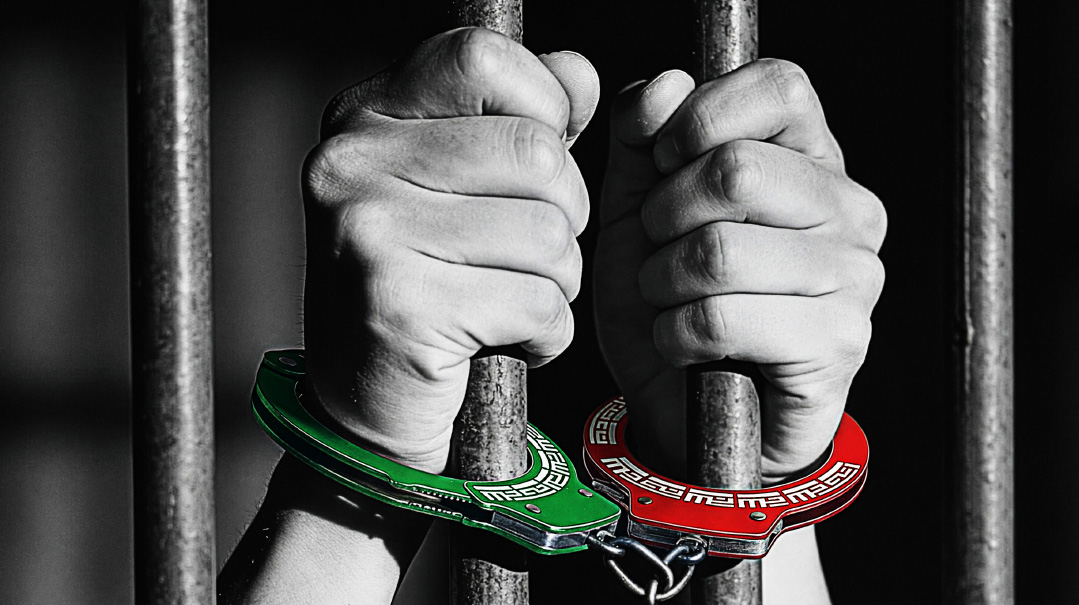
As Iran teeters on the brink of civil war, with close to 17,000 dead and thousands more injured over the past weeks, three dissidents who in the last decade survived the regime’s most feared prisons tell Mishpacha about torture, interrogations, and the obsession with Israel.
Their testimonies offer a glimpse into the suffering that haunts millions of Iranians — and raises the question on everyone’s mind: Is the end of the rule of the ayatollahs finally here?
A gray morning rose over the northern Iranian town of Sangsarveh on October 28, 2022. A black Subaru sped along the winding mountain roads, carrying Tehran-based journalist Ehsan Pirbornash and three members of his family.
From a bend in the road, a silver sedan swerved in front of the Subaru, while a black Peugeot boxed them in from behind. Three men jumped out, dragged Pirbornash from the vehicle, and two hours later he was in a dimly lit interrogation room at a detention facility in Sari, capital of Mazandaran Province.
Marked Man
Ehsan Pirbornash, 43, is a former editor of the state-run sports magazine Varzeshii, as well as a former satirical commentator who wasn’t scared to voice criticism of the regime. Prior to his arrest, he reported via Twitter on the protests following the death of 22-year-old Mahsa Amini, arrested by the morality police for violating the country’s religious dress code. Following Amini’s death in custody, Iran’s press corps paid a heavy price for reporting on her murder and the nationwide protests that followed. Scores of journalists were among those arrested as Iranian authorities cracked down on the demonstrators.
“I was well known in the Iranian journalism world,” Pirbornash tells Mishpacha from his German home-in-exile, happy, he says, to be speaking with Israeli media. “But everything ended three years ago, when the regime put me on its radar.”
Because of the heavy censorship, Pirbornash took a break from his formal position and instead began publishing critical social and political content online. After Mahsa Amini was killed, regime forces tried to contact him repeatedly, but he essentially ignored them.
“That only made them angrier,” he says. “Especially when I published a photo of an injury I sustained during a protest, when a security officer struck me in the head with brass knuckles, tearing open my forehead.”
With his network of contacts, he reached out to international human rights organizations, attaching photos of his injuries, which, he says, “pushed the regime into overdrive.”
Even as Pirbornash was being followed, he traveled briefly to Saudi Arabia to recover, and when he returned, the calls resumed.
“In Iran, when a blocked number calls you, you know immediately it’s security services — the Revolutionary Guards, the Basij, the Intelligence Ministry, or all of them working together,” he says.
Fearing arrest, Pirbornash avoided his home, hiding with relatives in various towns. They finally caught up with him in Sangsarveh.
Hauled off to the detention center in Sari, his hands and feet were tied, he was blindfolded, and a rope was looped under his arms.
“They kept beating me, mostly my head and face,” he relates. “At one point, I heard an agent suggest killing me on the spot, while another sat on my chest and pressed down on my neck. But they decided that would cause too many problems, although they didn’t care at all how much pain they inflicted.”
Pirbornash says that in Iran, you grow up knowing that one day, you might be arrested.
“So you prepare yourself,” he says. “I spent years imagining the worst-case scenarios. But all that evaporates once the prison door closes.”
The charges leveled against him, he discovered, were sweeping and vague: his articles, his accusations against the regime, even jokes he had published online.
He spent ten days in the detention center before being moved to Qaimshahr Prison.
RELATED CONTENT
Jewish Panama may be known for wealth, but its real treasure is a Torah revival
Rav Yitzchak Biton and his wife, Tamar, have become powerful symbols of faith for a nation under fire

A former financial wiz bridges the gap between virtual reality and eternal content
The Pnei Menachem's youngest child opens a rare window into his father’s mesirus nefesh for his chassidim — and for every Yid