Heart of Love, Spine of Steel
 | February 10, 2026
Rav Elyakim Schlesinger branded generations with a century of love and leadership
Photos: Mattis Goldberg, Dudi Brown
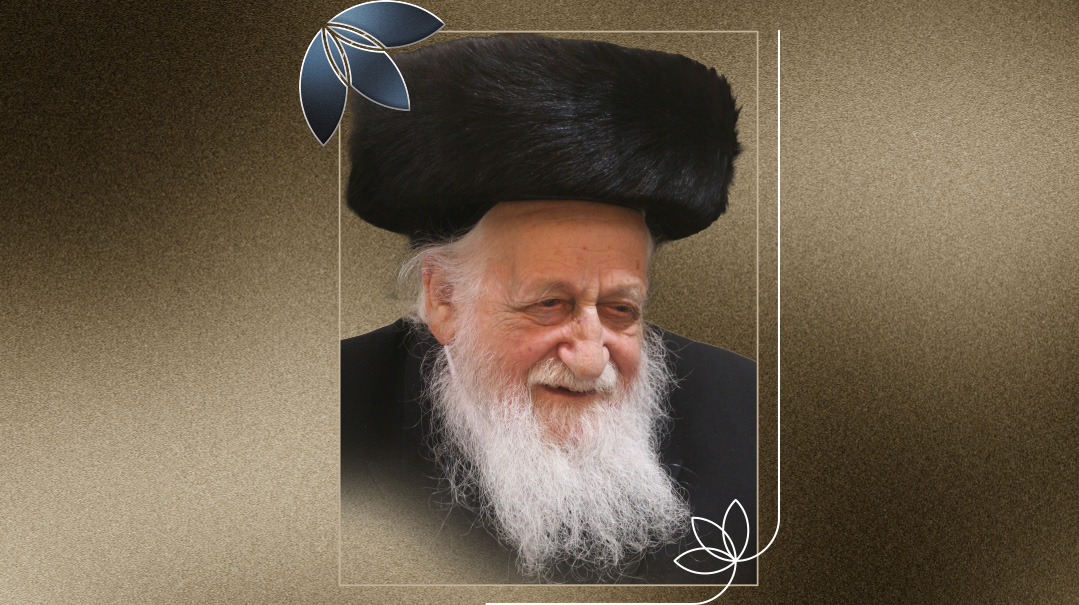
The modest Stamford Hill home of Rav Elyakim Schlesinger, who passed away last week at the age of 104, was a citadel in the London suburbs. From behind that simple facade, the Rosh Yeshivah presided over a rare synthesis of Brisk, Hungarian fire, and Yerushalmi austerity, shaping generations with a century of love and a brand of leadership as uncompromising as it was misunderstood
To the uninformed, the modest yellow-brick home at the heart of Stamford Hill’s chassidish community was a typical North London house. But behind the front door that was never locked, 45 St. Kildas Road was far from ordinary.
Home to Rav Elyakim Schlesinger, the oldest rosh yeshivah in the world who passed away last week at age 104, it functioned as an embassy of sorts — an extraordinary outpost of Brisk and Yerushalmi-style avodas Hashem in London’s humdrum suburbs.
A legend in his own lifetime, Rav Elyakim was the meeting point of parallel worlds of greatness that together shaped him into a unique individual.
Born in Vienna in 1920 to Rav Dovid and Baila Schlesinger, his mother was a daughter of prewar Agudah leader Rav Yaakov Rosenheim. Despite that background and the fact that his wife, Rebbetzin Yehudit, was the daughter of Rabbi Moshe Blau, Agudah head in Eretz Yisrael, he trod a very different path that took him deep into the anti-Agudah world of Hungarian Orthodoxy.
After learning with his grandfather Rav Eliezer Lipshitz Schlesinger, descendant of Rav Elyakim Getzel Schlesinger who was the famed dayan of Hamburg, as a young teen he was sent by his father to Pressburg to learn under the Daas Sofer.
At a time when many traveled to Lithuania, that move was explained by proximity. Vienna is less than an hour by road to Pressburg, or Bratislava as it’s now known. But that initial exposure meant that the grandson of an Agudah legend was drawn into a different world that would put its stamp on him.
After Pressburg came Nitra, a yeshivah in the Oberland vein headed by Rav Shmuel Dovid Ungar. Then, when the Schlesinger family moved to Tel Aviv in 1931, Elyakim went to the Yerushalmi yeshivah of the Maharitz Dushinsky, the Hungarian-born Gaavad of the Eidah Hachareidis, whom Rav Elyakim came to consider as his primary rebbi.
Only after that deep immersion in the world of Hungarian-style yeshivos did a young Elyakim Schlesinger head to Lomza in Petach Tikva. As a chassan, he then went to Ponevezh, where he developed a close relationship with the mashgichim Rav Abba Grossbard and Rav Yechezkel Levenstein.
Eventually, his exposure to the litvish world led to a deep relationship with the Chazon Ish and then the Brisker Rav.
These great figures appreciated first and foremost that the young man was a masmid. As a bochur, he would keep his feet in cold water to prevent himself falling asleep as he learned deep into the night.
As a yungerman, he never slept more than two hours a night. He had a one-room apartment in Yerushalayim that was partitioned by a curtain. At 4 a.m., his chavrusa would arrive, and they would learn on the other side of the curtain from where the rebbetzin slept.
The Chazon Ish’s respect for the young man — whose daily learning often spanned 18 hours — was reflected in the term “yedid nafshi” that he used to inscribe a wedding gift. It was the Chazon Ish who urged his protégé to persist in his efforts to break into the Brisker Rav’s inner circle.
Taken together, these varying influences shaped Rav Elyakim Schlesinger as a leader who combined lamdanus, scrupulous adherence to halachah, and a willingness to take unpopular stances where others preferred to remain quiet.
RELATED CONTENT
Jewish Panama may be known for wealth, but its real treasure is a Torah revival
Rav Yitzchak Biton and his wife, Tamar, have become powerful symbols of faith for a nation under fire

A former financial wiz bridges the gap between virtual reality and eternal content
The Pnei Menachem's youngest child opens a rare window into his father’s mesirus nefesh for his chassidim — and for every Yid