Belgian Battleground
 | May 22, 2019
Photos: Eli Itkin
W
hat do you get if you place Boro Park next to Manhattan and add some European architectural flair, along with a threat to Jewish communal life?
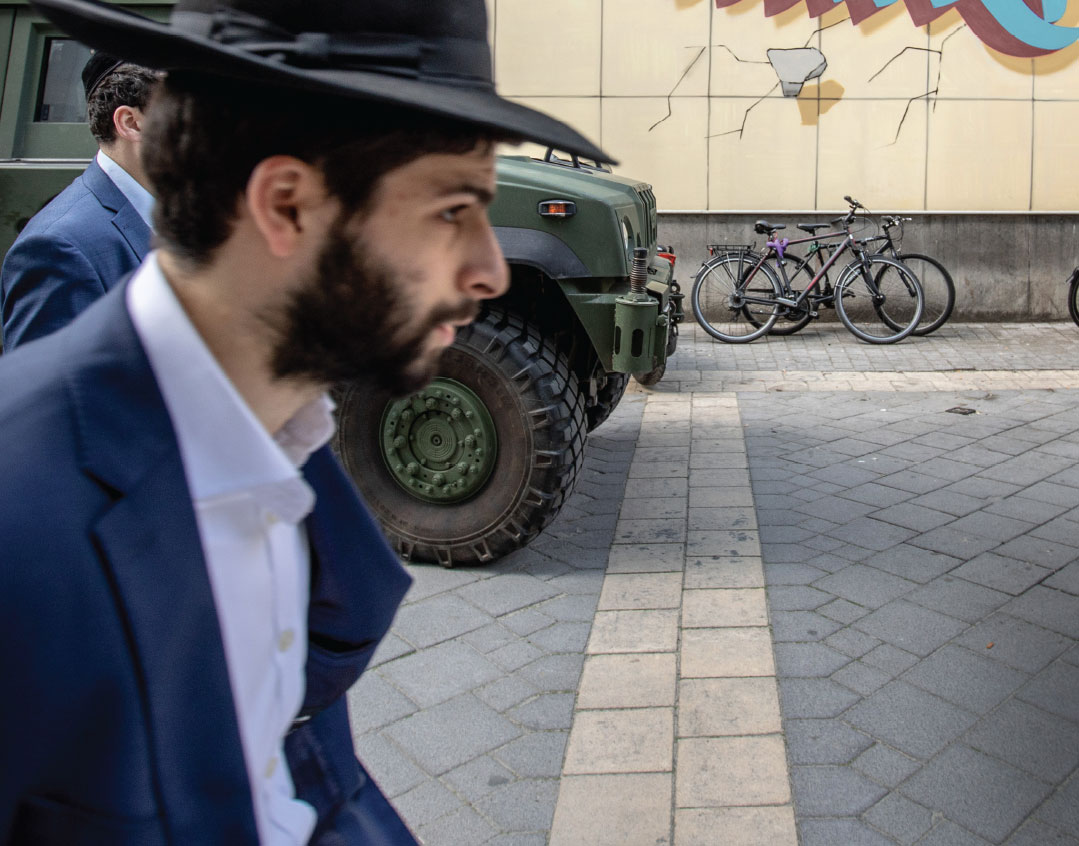
Welcome to Antwerp, Belgium — a shtetl for the 21st century. It’s a place where you can practically walk out of shul right into the city’s main business district; where a rich, un-Americanized Yiddish is still spoken by all types of Jews; and where the bike rider you see is as likely to be a chassid as a hipster.
Antwerp may be a shtetl, but it’s one under threat. As in much of Western Europe, an armed police presence is the new normal after the Islamic attacks of the last few years. And parnassah isn’t what it used to be: The world-famous diamond bourse that once pumped wealth into the Jewish community has fallen on hard times. Diamond stores there are aplenty still, but the Klondike boom years are over, as Indians have muscled out Jews from their primacy in the world diamond trade. But a few months ago, a major blow fell as Belgium became the first Western country since the Nazi era to ban shechitah.
It was against that background that Antwerp played host to the Conference of European Rabbis’ biennial meet-up. Bringing together hundreds of rabbanim, dayanim, and community leaders from across Europe, the CER convention has an AIPAC-like quality, hosting speakers ranging from Rav Asher Weiss, both Israeli chief rabbis, and White House anti-Semitism czar Elan Carr inside the hall; and politics, media events, and deals outside of it.
The official conference theme was the slightly anodyne “Torah versus contemporary challenges”; based on the hot-button issues actually raised, it might more usefully have been called “Torah clashes with secular society.” From the Belgian shechitah ban and a scandal involving Jewish graves in Paris, to metastasizing European anti-Semitism, this was a seminar in managing the growing conflict between secular human rights–based systems and Jewish religious life. And although the setting was Antwerp and the problems European, Jewish issues are increasingly international in the 21st century. What happens in Hoboken, Antwerp, may sooner or later come to Hoboken, New Jersey.
Where Chassidim Ride Bikes
The first thing that strikes a visitor to Antwerp — almost literally — are the bikes. Cities all over the word have become bike-friendly, but Antwerp is in another league. Intricate cycle routes complete with their own mini traffic lights cross the city, and swarms of bikers move everywhere. Antwerp’s topography makes this possible — the city is as flat as the Dutch accent of the local Flemish dialect.
But Antwerp isn’t just a biker’s haven: It’s a latter-day Roman Vishniac’s paradise as well. Yiddish is still alive and well as an everyday language, even beyond the chassidic community: The bareheaded manager of the famous Kleinblatt’s bakery directs me to “sheel” in a deliciously Galician accent. The sight of chassidim on quaint bikes framed by vintage trams and statues of Van Dyck and Rubens begs to be preserved for posterity in sepia.
RELATED CONTENT

Jewish Panama may be known for wealth, but its real treasure is a Torah revival

Rav Yitzchak Biton and his wife, Tamar, have become powerful symbols of faith for a nation under fire

A former financial wiz bridges the gap between virtual reality and eternal content

The Pnei Menachem's youngest child opens a rare window into his father’s mesirus nefesh for his chassidim — and for every Yid